The First Step Toward Feed Additives in Dairy Farming
A short story for feed additives: In the early 1900s, a dairy farmer noticed that some of his cows became weak after calving, produced less milk, and had difficulty maintaining good health, even though they received enough grass and hay. At that time, farmers believed that quantity of feed was the key to productivity. However, agricultural scientists discovered that cows also needed small amounts of essential nutrients that were missing from normal diets.
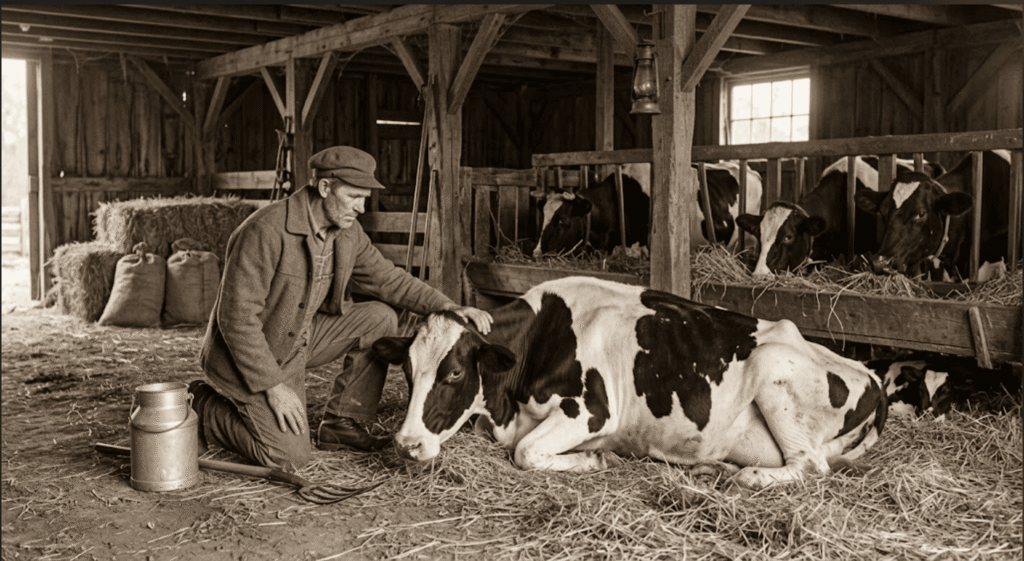
Researchers began adding small quantities of minerals such as salt, calcium, and phosphorus to cattle feed. The results surprised farmers: cows became healthier, milk production improved, and reproductive problems decreased. These early mineral supplements became the first examples of modern Feed additives used in dairy farming.
This simple idea changed the future of livestock nutrition. Farmers realized that improving the quality and balance of feed ingredients was more important than simply increasing feed volume. Over time, these discoveries developed into advanced additives such as vitamins, yeast cultures, probiotics, enzymes, and rumen modifiers used today in modern dairy cow nutrition and TMR feeding systems.
As dairy farming became more commercial after World War II, milk demand increased rapidly. Farmers needed healthier cows that could produce more milk while maintaining good reproductive performance. This created a strong need for nutritional supplements that could correct deficiencies, improve digestion, and increase feed efficiency. Early feed additives mainly included mineral supplements such as calcium and phosphorus, along with vitamins A, D, and E. Over time, scientists introduced yeast cultures, probiotics, enzymes, buffers, and rumen-protected nutrients to support higher-producing dairy herds.
Today, feed additives are an essential part of modern dairy cow nutrition. Rather than replacing quality feed ingredients, they complement balanced rations by improving nutrient utilization, supporting rumen function, and helping cows perform efficiently throughout different stages of lactation.
| Time Period | Major Development | Why It Happened | Benefits to Dairy Farms |
|---|---|---|---|
| Before 1900 | Basic mineral supplementation | Prevent nutritional deficiencies | Improved animal health and bone development |
| 1900–1945 | Scientific studies on vitamins and minerals | Better understanding of cow nutritional needs | Healthier cows and more consistent milk production |
| 1945–1970 | Commercial feed additives introduced | Growing demand for higher milk production | Increased productivity and improved feed efficiency |
| 1970–2000 | Yeast, buffers, enzymes, and probiotics | Improve rumen health and digestion | Better nutrient absorption and reduced digestive disorders |
| 2000–Present | Precision nutrition and specialized additives | Optimize herd performance and sustainability | Higher milk yield, better dairy farm profitability, and lower environmental impact |
One of the biggest reasons feed additives became widely adopted was the increasing cost of livestock production. Feed accounts for the largest operating expense on most dairy farms, often representing more than half of total production costs. Even a small improvement in feed efficiency can significantly contribute to feed cost reduction, making feed additives a valuable investment rather than an additional expense.
The development of the TMR feeding system (Total Mixed Ration) further accelerated the use of feed additives. Instead of feeding forage and concentrates separately, the TMR feeding system mixes all feed ingredients into one uniform ration. This ensures that every cow receives the intended amount of nutrients and feed additives in each bite, improving consistency, reducing feed sorting, and maximizing the effectiveness of nutritional supplements.
Modern dairy producers now rely on feed additives not only to increase milk yield but also to improve fertility, strengthen immunity, reduce metabolic disorders, and support cow longevity. Combined with high-quality feed ingredients, accurate ration formulation, and an efficient TMR feeding system, feed additives have become an indispensable tool for enhancing dairy cow nutrition, achieving sustainable feed cost reduction, and improving long-term dairy farm profitability.
Major Groups of Feed Additives in the Dairy Industry
| Main Group | Additive Categories Included | Main Purpose |
|---|---|---|
| 1. Nutritional Additives | Vitamins, Minerals, Amino Acids, Fat Supplements | Provide essential nutrients, improve milk production, support reproduction, and balance dairy cow nutrition |
| 2. Rumen & Digestive Health Additives | Yeast Products, Probiotics, Prebiotics, Enzymes, Buffers & Rumen Modifiers | Improve rumen fermentation, fiber digestion, nutrient absorption, and feed efficiency |
| 3. Feed Safety Additives | Toxin Binders, Mold Inhibitors | Protect cows from mycotoxins and improve the safety of feed ingredients |
| 4. Natural & Functional Additives | Phytogenic Additives (Essential Oils, Plant Extracts), Antioxidants | Support immunity, digestion, stress resistance, and natural animal health |
| 5. Specialty & Future Additives | Methane Reduction Additives, Heat Stress Additives, Precision Nutrition Additives | Address specific challenges in modern dairy farming and improve sustainability |
Different Stages of dairy cows need difference
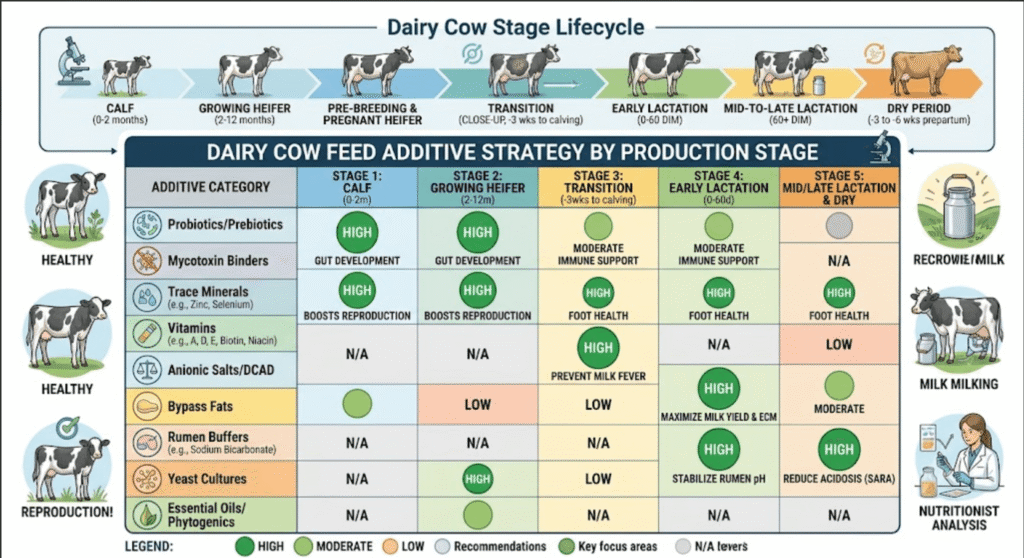
Different dairy cow stages require different feed additive strategies because nutrient needs change with milk production, reproduction, rumen development, and stress level. The following table shows which additive categories are most suitable for each production stage.
| Dairy Cow Stage | Main Additive Categories | Common Additives | Main Benefits |
|---|---|---|---|
| 1. Calves (Birth–6 months) | Rumen & Digestive Health Additives | Probiotics, Prebiotics, Yeast Products, Enzymes, Vitamins, Minerals | Develop healthy rumen, improve immunity, increase growth rate, reduce diarrhea risk |
| 2. Heifers (6 months–First Calving) | Nutritional Additives + Rumen Health Additives | Minerals, Vitamins, Yeast, Amino Acids | Support body growth, reproductive development, and efficient feed utilization |
| 3. Dry Cows (60–0 days Before Calving) | Nutritional Additives + Feed Safety Additives | Vitamin E, Selenium, Calcium balance products, Magnesium, Toxin Binders | Prepare cows for calving, improve immunity, reduce metabolic diseases |
| 4. Transition Cows (21 days Before to 21 days After Calving) | Nutritional Additives + Rumen Modifiers + Functional Additives | Yeast, Probiotics, Niacin, Antioxidants, Amino Acids, Calcium supplements | Reduce calving stress, prevent ketosis and milk fever, improve early lactation performance |
| 5. Early Lactation Cows (0–70 days After Calving) | Energy Additives + Rumen Health Additives | Bypass Fat, Methionine, Lysine, Yeast, Buffers, Enzymes | Increase milk yield, improve energy balance, maintain rumen health |
| 6. Peak & Mid Lactation Cows (70–200 days) | Nutritional Additives + Feed Efficiency Additives | Amino Acids, Minerals, Yeast, Enzymes, Toxin Binders | Maintain milk production, improve feed conversion, reduce feed waste |
| 7. Late Lactation Cows (200+ days) | Nutritional Additives + Reproductive Support Additives | Minerals, Vitamins, Antioxidants, Trace Minerals | Support fertility, maintain body condition, prepare for next pregnancy |
| 8. Heat Stress Period (Summer / Hot Climate) | Functional Additives + Specialty Additives | Electrolytes, Antioxidants, Yeast, Chromium, Essential Oils | Reduce heat stress, maintain feed intake, protect milk production |
Impact of Feed Additives on Dairy Cow Performance: Before vs After
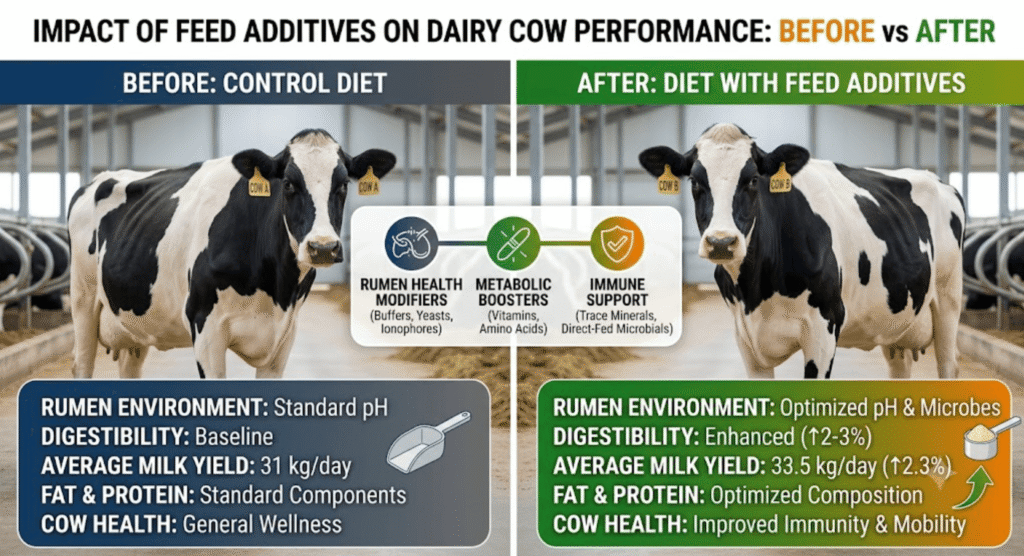
When properly selected and combined with balanced feed ingredients and a well-managed TMR feeding system, feed additives can improve milk production, cow health, and farm efficiency. The actual results depend on herd genetics, ration quality, climate, and management level, but commercial dairy farms commonly report the following improvements.
| Performance Indicator | Before Using Feed Additives | After Using Feed Additives | Typical Improvement |
|---|---|---|---|
| Milk Yield per Cow per Day | 28–32 kg | 31–36 kg | +2–5 kg/cow/day |
| Milk Fat Content | 3.5–3.8% | 3.8–4.2% | +0.2–0.4 percentage points |
| Milk Protein Content | 3.0–3.2% | 3.2–3.5% | +0.1–0.3 percentage points |
| Feed Conversion Efficiency (Milk kg / Dry Matter Intake kg) | 1.35–1.45 | 1.50–1.65 | +10–15% |
| Feed Waste from Sorting & Poor Digestion | 8–12% | 3–6% | Reduced 40–60% |
| Rumen Acidosis Cases | 10–15 cases /100 cows/year | 4–8 cases /100 cows/year | Reduced 40–60% |
| Calf Diarrhea Rate | 20–30% of calves | 10–15% of calves | Reduced 40–50% |
| Days Open (Calving Interval Efficiency) | 130–160 days | 110–130 days | Reduced 15–25 days |
| Somatic Cell Count (SCC) | 200,000–300,000 cells/ml | 120,000–200,000 cells/ml | Reduced 30–40% |
| Feed Cost per kg Milk | $0.18–0.22/kg milk | $0.16–0.20/kg milk | Reduced 5–10% |
Example: 1,000-Cow Dairy Farm
Before Using Feed Additives
- Average milk production: 30 kg/cow/day
- Total daily milk: 30,000 kg
- Feed cost: $0.20/kg milk
Daily feed cost:
30,000 × $0.20 = $6,000/day
After Using Feed Additives
Assume:
- Milk production increases by 3 kg/cow/day
- Feed efficiency improves by 10%
New milk production:
33 kg × 1,000 cows = 33,000 kg/day
If feed cost decreases to $0.18/kg milk:
Daily feed cost:
33,000 × $0.18 = $5,940/day
Additional benefits:
- +3,000 kg milk/day
- Lower feed cost per kg milk
- Healthier cows
- Fewer veterinary treatments
Why These Improvements Happen
Feed additives do not replace good feed ingredients or proper feeding management. Their role is to help cows use nutrients more efficiently:
- Yeast and probiotics improve rumen fermentation.
- Buffers maintain stable rumen pH in high-energy diets.
- Amino acids improve milk protein production.
- Bypass fat provides extra energy during early lactation.
- Minerals and vitamins support immunity and reproduction.
- Toxin binders protect cows from poor-quality feed.
Combined with a precise TMR feeding system, proper ration formulation, and farm data monitoring, feed additives become an important tool for feed cost reduction and improving long-term dairy farm profitability.
Top 4 FAQs About Feed Additives for Dairy Cows
1. Do feed additives really increase milk production?
Yes. When used correctly, feed additives can improve milk production by increasing nutrient availability and improving rumen function. Typical improvements are 2–5 kg more milk per cow per day, especially in high-producing cows during early lactation. However, additives work best when combined with high-quality feed ingredients, balanced rations, and proper TMR feeding system management.
2. Which feed additives are most important for dairy cows?
The most commonly used additives are:
- Yeast products → improve rumen fermentation and fiber digestion
- Minerals and vitamins → support immunity, fertility, and overall health
- Amino acids (Methionine and Lysine) → improve milk protein production
- Buffers → prevent rumen acidosis in high-energy diets
- Bypass fat → provide extra energy for high milk production
- Toxin binders → protect cows from harmful substances in feed ingredients
The best additive depends on the cow’s stage, diet, production level, and farm conditions.
3. Can feed additives reduce dairy farm feed costs?
Yes. Feed additives can support feed cost reduction by improving feed efficiency. Instead of simply feeding more expensive ingredients, additives help cows extract more nutrients from the existing ration.
Typical benefits include:
- 5–10% lower feed cost per kg of milk
- Reduced feed waste
- Better dry matter utilization
- Fewer health problems and veterinary expenses
A well-designed TMR feeding system helps distribute additives evenly so every cow receives the correct amount.
4. How do farmers choose the right feed additives for different cow stages?
Farmers should select additives based on production stage:
- Calves: probiotics, prebiotics, vitamins → support gut development and immunity
- Heifers: minerals, vitamins, yeast → support growth and reproduction
- Transition cows: calcium products, antioxidants, yeast → reduce calving stress and metabolic problems
- Early lactation cows: bypass fat, amino acids, rumen modifiers → maximize milk production
- High-producing cows: buffers, yeast, enzymes → maintain rumen health and feed efficiency