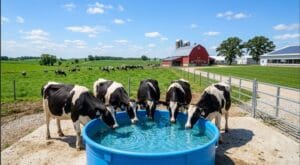
The dairy industry is closely connected with biology (dairy cow genetics). Biology explains how dairy cows grow, reproduce, produce milk, maintain health, and interact with the environment. Modern dairy farming applies biological knowledge through genetics, nutrition, microbiology, and biotechnology to improve production efficiency, animal welfare, and sustainability.
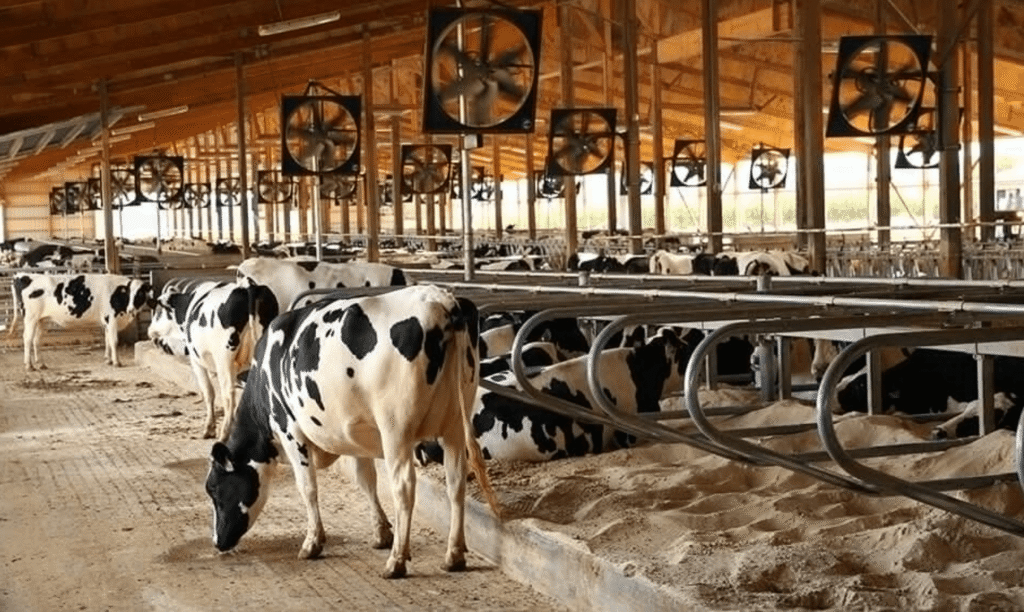
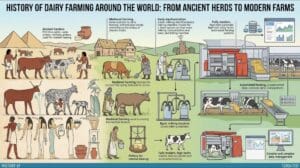
The evolution of dairy cattle has progressed through several major stages:
| Evolution Stage | Main Development |
|---|---|
| Wild Cattle Ancestors | Natural evolution created strong, adaptable cattle with excellent survival abilities |
| Aurochs (Bos primigenius) | The ancient wild ancestor of modern cattle, providing the genetic foundation for future cattle development |
| Domesticated Cattle | Humans began selecting cattle for docile behavior, reproduction, and agricultural value |
| Selective Breeding of Dairy Cow Breeds | Farmers developed specialized breeds such as Holstein, Jersey, and Brown Swiss for milk production, quality, and adaptability |
| High-Producing Modern Dairy Cattle | Genetic improvement, artificial insemination, and better nutrition created cows with higher milk yield and efficiency |
| Smart Dairy Farming Systems | Biotechnology, genomic selection, AI monitoring, robotics, and precision feeding are transforming dairy production |
Early Dairy Cow Selection: Choosing the Best Natural Performers
Thousands of years ago, dairy farming was based mainly on observation and experience. Farmers did not understand genetics or DNA, but they gradually improved their herds by selecting cows with better performance. This early selection process became the foundation of modern dairy cattle development.
| Development Stage | Main Characteristics | Impact on Dairy Farming |
|---|---|---|
| Early Cattle Selection | Farmers selected cows with higher milk production, stronger bodies, better fertility, and easier management | Improved herd quality through natural selection by farmers |
| Dual-Purpose Cattle Period | Early cattle were mainly used for both milk and meat production | Cows were versatile but had relatively low milk production |
| Experience-Based Breeding | Farmers kept offspring from superior cows for future breeding | Gradually improved milk yield and herd performance |
| Foundation of Dairy Breeding | Continuous selection created differences among cattle populations | Later development of specialized dairy cow breeds |
1. Early Dairy Farming Based on Observation
In ancient dairy farming, farmers selected animals according to visible characteristics rather than scientific measurements. They preferred cows that:
- Produced more milk
- Had strong body structure
- Were healthy and fertile
- Had a calm temperament and were easy to manage
Although farmers did not know about genes, they understood an important biological principle: animals with better performance could pass useful traits to future generations.
2. From General Cattle to Dairy Cattle
Early cattle were not specialized dairy animals. They were mainly dual-purpose cattle, providing:
- Milk for human consumption
- Meat for food
- Labor for farming in some regions
Because farmers selected cows for multiple purposes, milk production remained limited compared with modern dairy cows.
3. The Beginning of Selective Breeding
Over many generations, farmers observed that calves from high-performing cows often had better production ability. Therefore, they started keeping the best animals as breeding stock.
This process gradually improved:
- Milk yield
- Body size
- Reproductive ability
- Adaptability
This became the foundation for the development of modern dairy cow breeds, such as Holstein, Jersey, and Brown Swiss.
4. Connection with Modern Dairy Farming
Today, this traditional selection method has developed into scientific breeding programs using:
- Artificial insemination
- Genetic evaluation
- Genomic selection
Modern farms also carefully manage replacement heifers, which are young female cattle raised to replace older cows in the milking herd. Selecting high-quality replacement heifers helps maintain continuous genetic improvement and increases future herd productivity.
The Development of Specialized Dairy Breeds
Many modern cattle breeds were developed by humans through selective breeding for specific purposes such as milk production, meat production, draft power, climate adaptation, or disease resistance.
| Breed | Developed For | Main Purpose | Key Characteristics |
|---|---|---|---|
| Holstein Friesian | High milk production | Dairy production | Highest milk yield, large body size, widely used in commercial dairy farms |
| Jersey | Milk quality improvement | Premium dairy products | High butterfat and protein content, efficient feed utilization |
| Brown Swiss | Long productive life and adaptability | Dairy production | Strong health, good fertility, excellent longevity |
| Guernsey | Rich milk composition | Dairy production | Golden-colored milk, high fat and protein content |
| Ayrshire | Balanced dairy performance | Dairy production | Good milk yield, strong adaptability, efficient grazing ability |
| Angus | Beef production | Meat industry | High-quality beef, good growth, easy calving |
| Hereford | Beef production | Meat industry | Hardy, adaptable, efficient weight gain |
| Charolais | Fast growth and large muscle development | Beef production | Large body size, high meat yield |
| Simmental | Dual-purpose production | Milk + beef | Strong growth, good milk ability, adaptable |
| Brahman | Heat and disease resistance | Tropical cattle production | Excellent heat tolerance and parasite resistance |
Development Direction of Human-Bred Cattle
| Human Goal | Resulting Cattle Type |
|---|---|
| More milk | Specialized dairy cow breeds |
| Higher milk fat/protein | Quality dairy breeds |
| More meat | Beef cattle breeds |
| Milk + meat | Dual-purpose breeds |
| Hot climate adaptation | Heat-tolerant breeds |
| Disease resistance | Hardy cattle breeds |
Successful Breeds vs Failed / Declined Breeds in Dairy Cattle Development
In dairy cattle history, some breeds became globally successful because they matched modern dairy farming needs, while others declined because they could not compete in milk production, efficiency, genetics, or economic performance.
(Note: “Failed breed” usually means a breed that lost commercial importance, not that the breed was biologically unsuccessful or extinct.)
| Purpose | Successful Dairy Breeds | Declined / Less Successful Breeds | Main Reason |
|---|---|---|---|
| High milk production | Holstein Friesian | Milking Shorthorn (as a specialized dairy breed) | Holstein achieved much higher milk yield through intensive genetic selection |
| Milk quality (fat & protein) | Jersey | Alderney | Jersey became more commercially valuable and widely improved |
| Dual-purpose cattle | Simmental | Traditional Shorthorn (dual-purpose lines) | Specialized dairy and beef breeds replaced many dual-purpose types |
| Regional dairy production | Brown Swiss | Dutch Belted | Brown Swiss had stronger commercial value and global breeding programs |
| Hardy dairy cattle | Ayrshire | Kerry cattle (dairy type) | Ayrshire received more breeding investment and international adoption |
Why some succeeded
Successful breeds usually had a combination of:
- High milk yield.
- Good butterfat or protein.
- Better feed conversion.
- Strong fertility and longevity.
- Ability to thrive under changing farm systems.
Why some declined
Breeds tended to fade when they:
- Produced less milk than newer competitors.
- Had weaker adaptability to intensive systems.
- Lacked the durability or management efficiency farmers wanted.
- Were replaced by breeds with stronger commercial value.
The Introduction of Genomic Selection
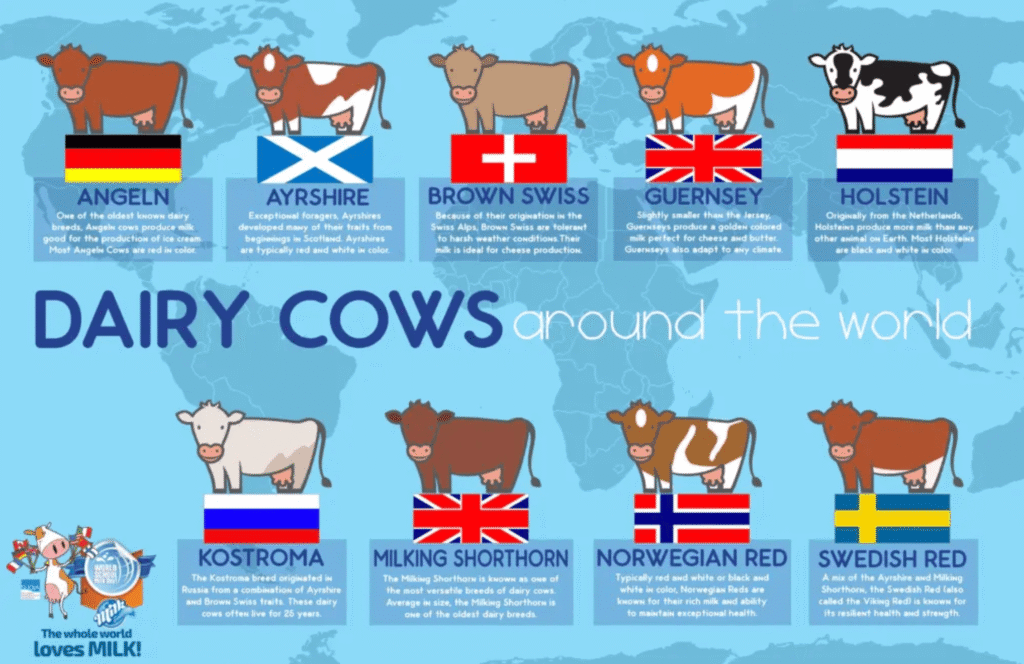
Image From: https://www.midwestdairy.com/resource/cows-around-the-world-poster/
One of the biggest changes in dairy cow genetics happened in the 21st century with the development of genomic selection.
Traditional breeding required waiting several years to evaluate whether an animal’s offspring performed well. Genomic testing changed this process by analyzing an animal’s DNA directly.
Farmers can now test young calves and identify their genetic potential before they start producing milk. This allows breeding decisions to be made much earlier.
Genomic selection helps identify animals with desirable traits, including:
- Higher milk production
- Better feed efficiency
- Improved fertility
- Stronger disease resistance
- Longer productive life
- Heat tolerance
This technology has greatly increased the speed of genetic progress in dairy farming.
Future Vision of Dairy Cattle and Dairy Farming
The future of dairy farming will move from traditional production models to a precision, data-driven, and intelligent biological system. The goal will no longer be only to increase milk production, but to achieve a balance between higher efficiency, better animal health, lower environmental impact, and improved animal welfare.
Future dairy farming will combine genetics, biotechnology, artificial intelligence, automation, and precision dairy farming to create a new generation of dairy production.
Top 5 Frequently Asked Questions (FAQs) About Dairy Cattle and Modern Dairy Farming
1. What are the most popular dairy cow breeds in the world?
The most popular dairy cow breeds are:
- Holstein Friesian – The world’s leading dairy breed, known for the highest milk production and widely used in commercial dairy farms.
- Jersey – Famous for high butterfat and protein content, making it ideal for premium dairy products.
- Brown Swiss – Known for strong health, long productive life, and adaptability.
- Ayrshire – A balanced dairy breed with good milk production and strong environmental adaptability.
- Guernsey – Valued for rich milk composition and high-quality dairy products.
Each breed has different advantages, and farmers choose breeds based on climate, feed resources, farm size, and production goals.
2. How did modern dairy cows evolve?
Modern dairy cows developed through thousands of years of domestication and human selection.
The evolution pathway is:
Wild Cattle Ancestors → Aurochs → Domesticated Cattle → Specialized Dairy Cow Breeds → High-Producing Dairy Cattle → Smart Dairy Cows
Early farmers selected cows with better milk production, stronger bodies, and easier management. Over generations, selective breeding created specialized dairy breeds with higher milk yield, better fertility, and improved health.
3. What is the role of genetics and biotechnology in dairy farming?
Genetics and biotechnology have transformed modern dairy farming.
They help improve:
- Milk production
- Milk quality
- Disease resistance
- Fertility
- Feed efficiency
- Cow longevity
Technologies such as genomic selection, DNA testing, artificial insemination, and embryo transfer allow farmers to select superior animals more accurately.
These improvements also help farmers choose better replacement heifers, which become the future foundation of the dairy herd.
4. What is precision dairy farming?
Precision dairy farming is a modern management approach that uses technology to monitor and manage individual cows.
It includes:
- Smart cow monitoring systems
- Wearable sensors and collars
- Automatic milking robots
- AI data analysis
- Precision feeding systems
These technologies collect real-time information about cow health, activity, nutrition, and production.
The goal is to improve:
- Animal health
- Milk production efficiency
- Labor efficiency
- Farm profitability
5. What will the future of dairy farming look like?
The future of dairy farming will become more intelligent, automated, and sustainable.
Future dairy farms will combine:
- Biotechnology
- Artificial intelligence
- Robotics
- Big data
- Precision dairy farming
Future dairy cows will be selected not only for high milk production but also for:
- Better health
- Longer lifespan
- Lower feed requirements
- Lower environmental impact
The future vision is a smart dairy farm where every cow has a digital profile, and farmers can make accurate decisions based on real-time biological data.