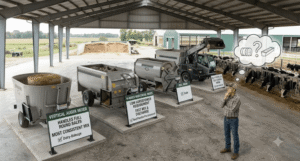
A successful dairy operation depends on having the right dairy farm equipment to manage feeding, milking, cleaning, and daily farm activities efficiently.
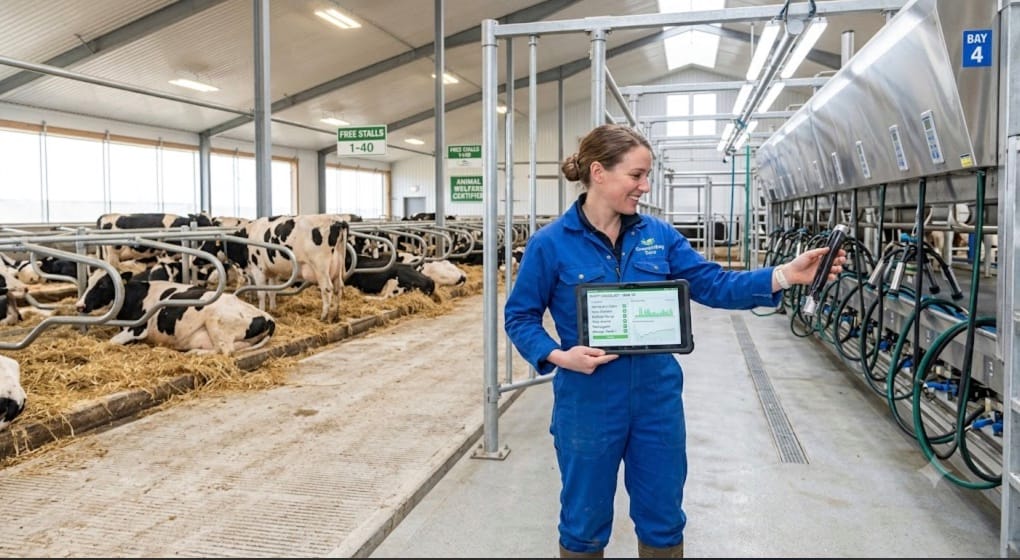
For beginners, selecting equipment can feel confusing because there are many machines available, from basic tools to advanced automatic systems. This dairy farm equipment guide helps new farmers understand the essential machines required for modern dairy operations. By reviewing a complete dairy equipment list, farmers can identify the right solutions for feeding, milking, housing, and farm management.
The most important equipment categories include feeding systems, TMR mixer solutions, dairy milking equipment, and dairy barn equipment. Each type of machine plays an important role in improving productivity, reducing labor requirements, and maintaining a healthier environment for dairy cows.
Modern dairy farming is becoming more technology-driven. Even small and medium-sized farms can improve productivity, reduce labor costs, and maintain better animal health by using suitable machines. This guide introduces the most important dairy farm equipment beginners should consider and explains how each system supports efficient dairy farm management.
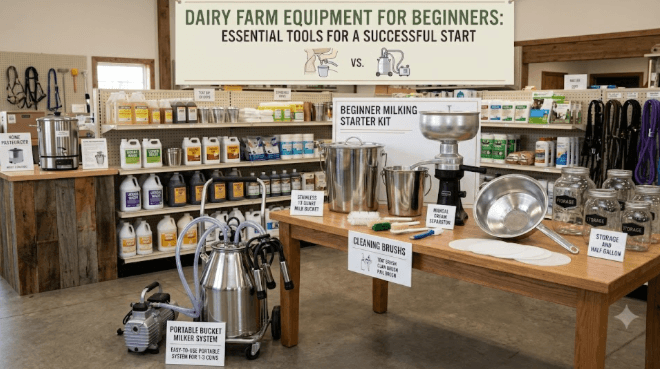
Essential Dairy Farm Equipment for Beginners
Choosing the right dairy farm equipment depends mainly on herd size, feeding requirements, labor availability, and future expansion plans. A small dairy farm usually focuses on simple and reliable machines, while medium and large farms require higher-capacity and more automated systems.
The following dairy equipment list introduces the essential machines beginners should consider and explains their main functions.
Essential Dairy Farm Equipment and Functions
| Equipment Name | Main Function |
|---|---|
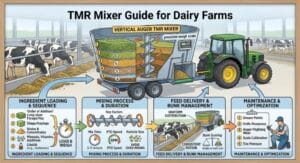
| TMR Mixer | Mixes forage, silage, grains, protein supplements, minerals, and feed additives into a balanced Total Mixed Ration (TMR). It improves feed uniformity, reduces feed sorting, minimizes waste, and helps cows receive consistent nutrition. |
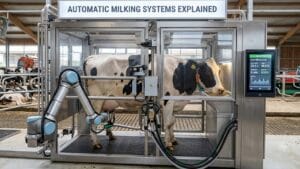
| Dairy Milking Equipment | Collects milk efficiently while improving hygiene, reducing labor requirements, and maintaining consistent milk quality. Includes portable milking machines, pipeline systems, milking parlors, and robotic milking systems. |
| Feed Storage Equipment | Stores hay, silage, grains, and other feed ingredients safely to maintain nutritional value and prevent spoilage. Common systems include silage bunkers, silos, grain bins, and storage sheds. |
| Feed Mixer Wagon / Feed Cart | Transports and distributes mixed feed to cows. It reduces manual feeding labor and improves feeding efficiency, especially for larger herds. |
| Dairy Barn Equipment | Provides a comfortable and healthy housing environment for cows. Includes feeding barriers, stalls, water troughs, cow brushes, bedding systems, ventilation equipment, and barn management tools. |
| Manure Management Equipment | Removes manure from barns and maintains cleanliness. Equipment includes manure scrapers, slurry pumps, manure separators, and automatic cleaning systems. |
| Water Supply System | Provides continuous access to clean drinking water, which is essential for milk production, digestion, and overall cow health. |
| Ventilation and Cooling System | Controls barn temperature and reduces heat stress. Systems include fans, sprinklers, tunnel ventilation, and automatic climate control equipment. |
| Cow Monitoring System | Tracks cow activity, health condition, reproduction status, and feeding behavior through smart collars, RFID tags, and farm management software. |
| Automatic Feeding Robot | Automatically delivers feed and pushes feed closer to cows. It reduces labor costs and improves feeding frequency and accuracy on large farms. |
Recommended Dairy Farm Equipment Size by Farm Scale
Different dairy farm sizes require different equipment capacities. Selecting the correct equipment size helps farmers balance investment cost, labor efficiency, and future expansion. A small farm may prioritize flexible and cost-effective machines, while large-scale dairy farms require high-capacity and automated systems.
| Equipment Name | Less Than 200 Cows | 200–500 Cows | 500–1,000 Cows | 1,000–3,000 Cows | More Than 3,000 Cows |
|---|---|---|---|---|---|
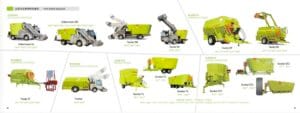
| TMR Mixer | 3–10 m³ | 10–20 m³ | 20–30 m³ | 30–50 m³ | 50+ m³ |
| Dairy Milking Equipment | 4–12 stalls | 12–24 stalls | 24–48 stalls | 48–80 stalls | 80+ stalls |
| Feed Storage Equipment | 100–500 m³ | 500–1,500 m³ | 1,500–3,000 m³ | 3,000–8,000 m³ | 8,000+ m³ |
| Feed Mixer Wagon / Feed Cart | 3–8 m³ | 8–15 m³ | 15–25 m³ | 25–40 m³ | 40+ m³ |
| Dairy Barn Equipment | 10–50 stalls | 50–200 stalls | 200–500 stalls | 500–1,500 stalls | 1,500+ stalls |
| Manure Management Equipment | 5–20 m³/day | 20–50 m³/day | 50–150 m³/day | 150–500 m³/day | 500+ m³/day |
| Water Supply System | 1–5 m³/day | 5–15 m³/day | 15–40 m³/day | 40–100 m³/day | 100+ m³/day |
| Ventilation and Cooling System | 5–20 fans | 20–50 fans | 50–120 fans | 120–300 fans | 300+ fans |
| Cow Monitoring System | 10–200 units | 200–500 units | 500–1,000 units | 1,000–3,000 units | 3,000+ units |
| Automatic Feeding Robot | 0–1 unit | 1–2 units | 2–5 units | 5–10 units | 10+ units |
Beginner Investment Priority
For most new dairy farmers, equipment investment should follow this order:
1. Feeding Equipment → TMR Mixer and Feed Storage
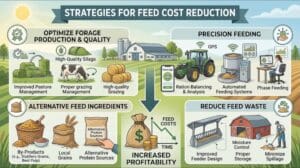
Feed cost represents one of the largest dairy farm expenses. A good feeding system improves nutrition accuracy and reduces feed waste.
2. Dairy Milking Equipment
Efficient milking improves milk hygiene, saves labor, and increases daily productivity.
3. Dairy Barn Equipment
Comfortable housing improves cow health, reduces disease risk, and supports higher milk yield.
4. Automation Technology
Smart collars, automatic feeding robots, and farm management software should be added as the farm expands.
Selecting the correct equipment size allows beginners to control investment costs while building a dairy operation that can grow efficiently in the future.
Top 10 Most Popular Questions from Beginners (FAQ)
1. What equipment do I need to start a dairy farm?
Beginners usually need basic dairy farm equipment including a feeding system, milking equipment, water supply system, barn equipment, manure management tools, and feed storage facilities. The required equipment depends mainly on herd size. Small farms can start with essential machines, while larger farms need more automation.
2. How much does dairy farm equipment cost for a beginner?
The investment depends on farm size and automation level. A small dairy farm may require tens of thousands of dollars for basic equipment, while commercial farms with advanced systems can require millions of dollars. The main cost factors include the TMR mixer, milking system, barn construction, and automation equipment.
3. What is the most important machine on a dairy farm?
The TMR mixer is one of the most important machines because feed cost is usually the largest operating expense on a dairy farm. A good TMR system improves feed consistency, reduces waste, saves labor, and helps maintain stable milk production.
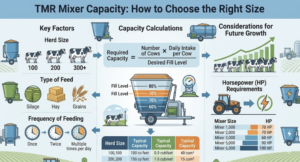
4. What size TMR mixer do I need for my dairy farm?
The required TMR mixer size depends on the number of cows:
| Farm Size | Recommended TMR Mixer Size |
|---|---|
| Less than 200 cows | 3–10 m³ |
| 200–500 cows | 10–20 m³ |
| 500–1,000 cows | 20–30 m³ |
| 1,000–3,000 cows | 30–50 m³ |
| More than 3,000 cows | 50+ m³ |
5. Do small dairy farms need automatic equipment?
Not always. Small farms with fewer than 200 cows can operate efficiently with basic equipment. However, machines such as a small TMR mixer, milking machine, and manure handling equipment can significantly reduce labor and improve productivity.
6. Which is better: manual feeding or TMR feeding?
TMR feeding is usually better for modern dairy farms because it provides a more balanced ration. Compared with manual feeding, a TMR system reduces feed sorting, improves nutrient intake, lowers feed waste, and saves daily labor.
7. What type of dairy milking equipment should beginners choose?
The choice depends on herd size:
- Small farms: portable milking machines or small pipeline systems
- Medium farms: herringbone or parallel milking parlors
- Large farms: rotary parlors or robotic milking systems
Beginners should select equipment based on current herd size and future expansion plans.
8. How many cows can one person manage with modern dairy equipment?
With traditional methods, one worker may manage only a limited number of cows. Modern equipment such as TMR mixers, automatic feeding systems, milking parlors, and cow monitoring systems can greatly increase labor efficiency.
Typical examples:
| Management Level | Cows Managed per Worker |
|---|---|
| Traditional farming | 20–50 cows |
| Semi-modern farm | 50–100 cows |
| Modern dairy farm | 100–200+ cows |
9. What equipment can reduce dairy farm labor costs?
The most effective labor-saving equipment includes:
- TMR mixer – reduces feeding labor
- Automatic feed pusher – reduces manual feed pushing
- Automatic milking systems – reduce milking labor
- Manure scrapers – reduce cleaning work
- Cow monitoring systems – improve management efficiency
10. Should beginners buy new or used dairy farm equipment?
Both options have advantages. New equipment usually provides better efficiency, warranty support, and lower maintenance risk. Used equipment can reduce initial investment but requires careful inspection of operating hours, maintenance records, and spare part availability.
For beginners, investing in reliable core equipment such as feeding and milking systems is usually more important than buying advanced automation too early.