Many people think a modern dairy farms are simply a place where cows eat grass and produce milk. In reality, modern dairy farming has evolved into a highly organized and technology-driven industry. Today’s large-scale dairy farms operate much like advanced manufacturing facilities, where every stage is carefully planned, monitored, and continuously optimized.
If we compare their workflows, the similarities become clear:
| Manufacturing | Dairy Farming |
|---|---|
| Inputs | Feed |
| Assets | Cows & Dairy farming Equipment |
| Production | Milk Production |
| Quality Control | Milk Quality Management |
| Finished Product | Raw Milk |
| Continuous Improvement | Farm Optimization |
Both industries follow a complete production system rather than a single production step. Each stage involves scientific planning, standardized operating procedures, quality control, performance monitoring, and continuous improvement. Manufacturing transforms raw materials into vehicles, while dairy farming transforms feed, water, genetics, and animal care into high-quality milk through a carefully managed biological process.
When viewed from an industrial perspective, a modern dairy farm is essentially a biological factory. Instead of machines assembling metal parts, healthy dairy cows—supported by advanced equipment, automation, and data-driven management—convert nutrients into milk efficiently and consistently. This is why today’s leading dairy farms increasingly adopt manufacturing principles such as automation, lean management, predictive maintenance, data analytics, and continuous improvement to maximize productivity, quality, and sustainability.rmers, machines, and technology all work together to create a healthy environment for cows and stable milk production.
How Modern Dairy Farms Work: From Cow Care to Daily Operations
As shown in the comparison table above, a manufacturing factory relies primarily on machines and equipment to produce its products. In contrast, a modern dairy farm depends on both machines and living animals. This makes dairy farming far more complex than conventional manufacturing.
Unlike industrial machines, dairy cows are living creatures with biological and emotional needs. They can become sick, experience heat or cold stress, feel tired, become dehydrated, or show signs of discomfort. Their health, nutrition, comfort, and overall well-being have a direct impact on milk production and milk quality.
For this reason, successful dairy farming is not just about operating equipment—it is about managing a biological production system. Farmers must provide balanced nutrition, clean water, comfortable housing, proper ventilation, and timely veterinary care while continuously monitoring each cow’s health and behavior. Modern dairy farms often use wearable sensors, automated monitoring systems, and herd management software to detect potential health problems before they affect production.
In many ways, dairy cows can be viewed as the farm’s most valuable production assets. However, unlike machines that can simply be repaired or replaced, cows require continuous care and attention throughout their lives. A healthy and comfortable cow will eat more, rest better, experience less stress, and produce more high-quality milk. This is why animal welfare is not only an ethical responsibility but also one of the most important factors in improving productivity, profitability, and the long-term sustainability of a modern dairy farm.
How Modern Dairy Farms Work Through Better Dairy Cow Nutrition
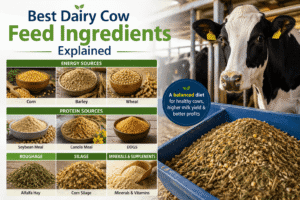
Nutrition is one of the most important parts of dairy farming. According to agricultural statistics and dairy science research, Dairy cows need a balanced diet that provides enough energy, protein, minerals, and vitamins.
Different dairy cow breeds produce different amounts of milk and have varying milk compositions, feed efficiency, disease resistance, and adaptability to different climates. For example, Holstein cows are known for their high milk yield, while Jersey cows produce milk with higher butterfat and protein content. Other breeds, such as Brown Swiss, Ayrshire, and Guernsey, each have their own strengths depending on the farm’s production goals and local environment.
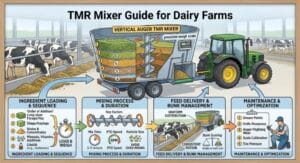
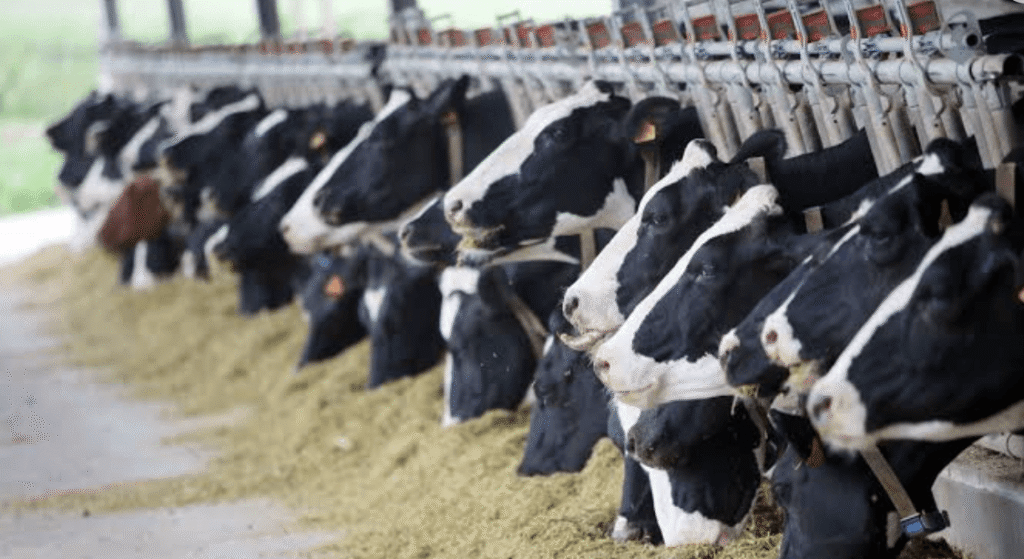
Many large farms use a feeding method called a Total Mixed Ration (TMR). A TMR system combines different feed materials, such as corn silage, hay, grains, soybean meal, and mineral supplements, into one balanced mixture.
A TMR mixer helps farmers prepare consistent feed every day. Because every bite contains similar nutrients, cows receive a more stable diet, which can improve milk production and reduce feed waste.
Farmers also adjust feed formulas based on the cow’s production stage. For example, a high-producing dairy cow needs more energy compared with a dry cow preparing for the next lactation period.
How Modern Dairy Farms Work with Smart Technology and Automation
Technology has become an important part of modern dairy farming. Many farms now use automated systems to collect information and make better decisions.
One common example is smart monitoring equipment. Sensors attached to cows can track activity levels, eating patterns, and health changes. If a cow becomes less active or shows unusual behavior, farmers can identify possible health problems earlier.
Automatic milking systems are another example of farm technology. These systems allow cows to enter a milking station when they are ready. The machine cleans the udder, attaches the milking equipment, and records milk production data.
Automation does not replace farmers. Instead, it helps farmers spend more time on important tasks, such as animal care and farm improvement.
How Modern Dairy Farms Work with Data-Based Farm Management
Modern farms collect large amounts of information every day. Data from milking machines, feed systems, and health monitoring tools helps farmers understand what is happening inside the herd.
For example, milk production records can show whether cows are producing less milk than normal. Feed information can help farmers identify whether a diet needs adjustment. Health records can reveal problems before they become serious.
This approach allows farmers to make decisions based on real information instead of only experience or observation.
The Role of Feeding Systems in Modern Dairy Production
Feeding is one of the biggest daily tasks on a dairy farm. Traditionally, workers had to prepare and deliver feed manually. This required a lot of labor and could lead to uneven feeding.
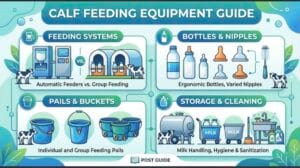
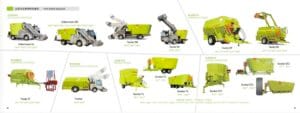
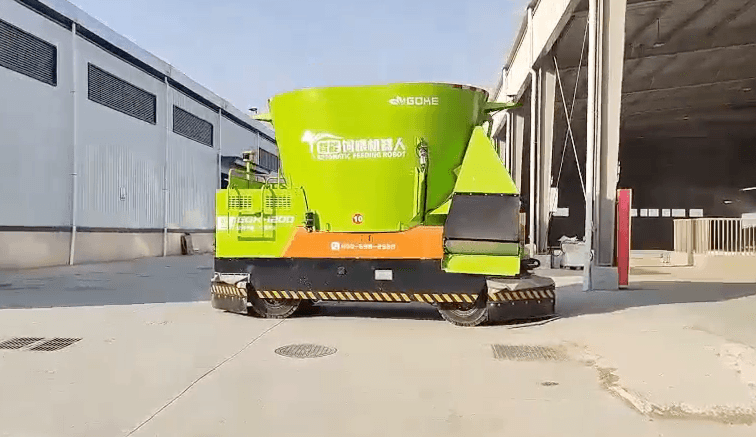
Today, many farms use advanced feeding equipment, including TMR mixers, automatic feeders, and feed-pushing robots. These machines improve feeding accuracy and reduce physical work.
A TMR mixer combines different ingredients into a uniform mixture. This prevents cows from selecting only their favorite ingredients and leaving less attractive feed behind. Better feed consistency can improve digestion and support healthier cows.
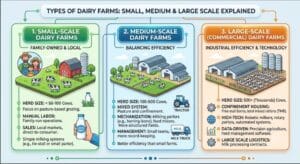
Large dairy operations may also use a central kitchen feeding system. In this setup, feed ingredients are stored, mixed, and distributed from one central location. This method is especially useful for farms with thousands of cows.
How Modern Dairy Farms Manage Milk Production and Quality
After cows are milked, the milk must be handled carefully to maintain quality. Modern dairy farms use strict procedures during milking, storage, and transportation.
Before milking, workers or automated systems clean the cow’s udder to reduce contamination risks. During milking, machines collect milk in a closed system, helping protect cleanliness.
Fresh milk is quickly transferred into cooling tanks. Lower temperatures slow bacterial growth and help maintain milk quality before collection by dairy processors.
Farmers regularly test milk samples for important indicators, including fat content, protein levels, and bacterial counts. These tests help ensure the milk meets industry standards.
Sustainable Practices Used by Modern Dairy Farms
Sustainability is becoming increasingly important in dairy farming. Modern farms are looking for ways to reduce waste, save resources, and protect the environment.
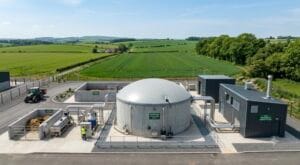
Manure management is one major area of improvement. Instead of treating manure as waste, many farms use it as a resource. Some farms install systems that convert manure into organic fertilizer or biogas energy.
Water conservation is another important practice. Dairy farms use water for animal drinking, cleaning, and cooling systems. Efficient equipment helps reduce unnecessary water consumption.
Energy-saving technologies, such as solar panels and energy-efficient motors, are also becoming more common on modern dairy farms.
Conclusion: How Modern Dairy Farms Work for the Future
Since the emergence of the AI revolution, artificial intelligence has influenced a wide range of industries and transformed the way people work. Global dairy industry is no exception. The traditional dairy farm is gradually evolving into a smart dairy farm, where data, automation, and intelligent systems are becoming essential parts of daily operations.
The development of smart dairy farming is also changing the design and layout of modern farms. In the past, dairy farm layouts were mainly focused on basic functions such as cow housing, feeding areas, and milking facilities. Today, farms are designed around data flow, automation, animal comfort, and operational efficiency.