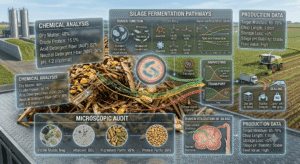
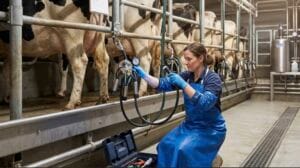
Total Mixed Ration (TMR) is a complete feeding method that combines all required feed ingredients, nutrients, and feed additives into one uniform mixture. Instead of feeding cows separately with forage, grain, and supplements, TMR allows dairy cows to receive a balanced ration in every bite. This feeding system is widely used in modern dairy farms because it improves feed efficiency, cow health, and farm productivity.
The main goal of TMR is to provide dairy cows with a consistent diet that meets their nutritional requirements during different production stages. A properly prepared TMR helps reduce feed sorting, improves rumen stability, and increases milk production.
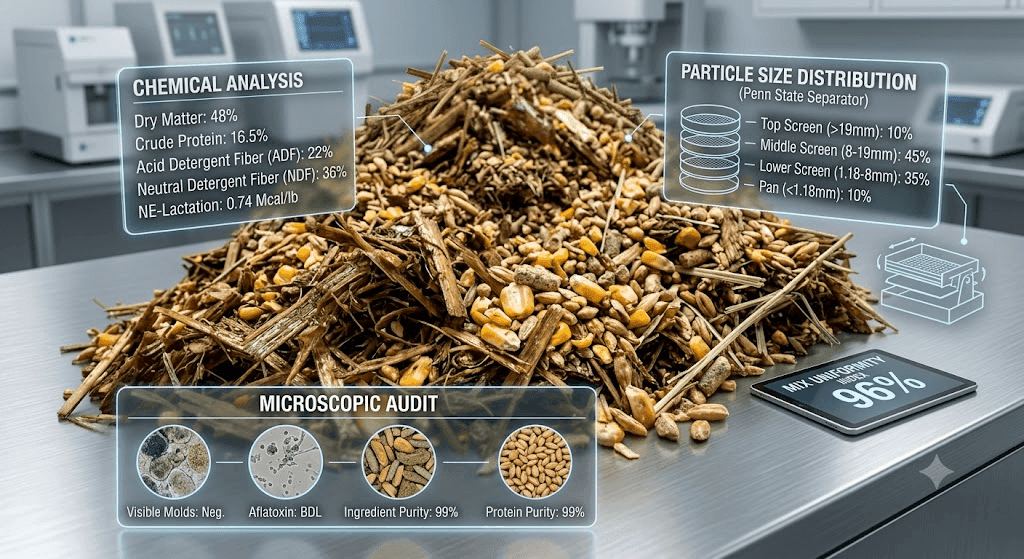
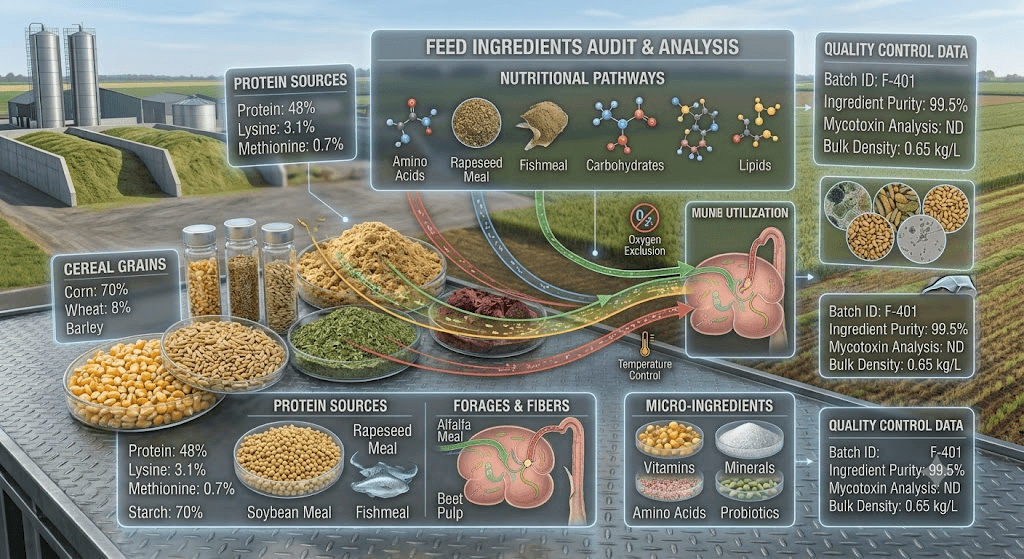
Classification of TMR Components
| TMR Component | Examples | Purpose |
|---|---|---|
| Forages | Corn silage, grass silage, alfalfa hay | Provide fiber for rumen function |
| Energy Sources | Corn grain, barley, wheat | Supply energy for milk production |
| Protein Sources | Soybean meal, canola meal, DDGS | Support muscle growth and milk protein production |
| Mineral Sources | Limestone, salt, mineral premix | Maintain bone health and metabolic function |
| Feed Additives | Yeast, vitamins, enzymes, buffers | Improve digestion and animal performance |
| Water | Drinking water or moisture from ingredients | Support feed intake and digestion |
A successful TMR program depends on selecting the correct ingredients, accurate mixing, and proper feeding management.
How to Achieve a High-Quality TMR
| Step | Key Action | How to Achieve It |
|---|---|---|
| 1. Analyze feed ingredients | Understand nutrient values | Test forage and raw materials regularly |
| 2. Formulate balanced ration | Match cow requirements | Work with nutritionists and use ration software |
| 3. Prepare ingredients correctly | Ensure proper particle size | Chop forage and measure materials accurately |
| 4. Mix uniformly | Create consistent feed | Use a high-quality tmr mixer with correct mixing time |
| 5. Deliver feed efficiently | Maintain fresh feed availability | Use proper feeding equipment or an automatic feeding system |
| 6. Monitor cow response | Evaluate results | Check milk production, body condition, and feed intake |
Role of TMR Mixer
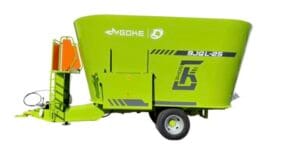
The tmr mixer is the core machine used in modern dairy feeding operations. It combines different materials into a uniform ration, preventing cows from selecting only their favorite ingredients. A properly mixed ration ensures that each cow receives the same amount of energy, protein, fiber, and minerals.
Different farms choose different mixer types depending on herd size and management style:
| Farm Size | Recommended Equipment | Reason |
|---|---|---|
| Small farms | Small horizontal or vertical mixer | Lower investment and flexible operation |
| Medium farms | Larger TMR mixer | Higher efficiency and labor saving |
| Large dairy farms | Central feeding system with automatic equipment | Supports large-scale production |
Why Is TMR Important for Dairy Farms?
Dairy cows have complex nutritional requirements that change according to their age, body condition, and milk production stage. A high-producing dairy cow may consume more than 20 kilograms of dry matter every day, and even small changes in nutrition can influence milk yield, reproduction, and overall health.
Traditional feeding methods often provide forage, grain, and supplements separately. However, cows naturally prefer more attractive ingredients, which can lead to selective eating and an unbalanced diet. Total Mixed Ration (TMR) solves this problem by combining all necessary feed materials into one complete and uniform ration.
A well-designed TMR program allows dairy farmers to provide consistent nutrition, improve feed efficiency, reduce waste, and support better herd performance.
Main Benefits of TMR Feeding
| Benefit | How TMR Works | Impact on Dairy Farms |
|---|---|---|
| Balanced Nutrition | All feed ingredients are mixed evenly so every bite contains the correct ratio of fiber, protein, energy, minerals, and vitamins. | Improves rumen stability and reduces nutritional problems. |
| Higher Milk Production | Cows receive a consistent nutrient supply every day, allowing better use of feed energy. | Supports stable milk yield and improved milk quality. |
| Lower Feed Waste | Prevents cows from selecting only preferred ingredients and leaving others behind. | Reduces feed losses and improves profitability. |
| Better Cow Health | Maintains stable digestion and reduces the risk of metabolic disorders. | Improves cow longevity and reduces veterinary costs. |
| Labor Efficiency | Modern TMR equipment reduces manual feeding work and improves accuracy. | Saves labor and increases farm management efficiency. |
The table above shows that TMR provides benefits beyond simple feed mixing. It influences the entire dairy production system, including nutrition management, animal health, labor requirements, and farm economics.
1. Provides Balanced Nutrition
One of the most important advantages of TMR is preventing cows from selecting only specific ingredients.
When feed ingredients are offered separately, cows may consume more grain because it is more palatable, while avoiding less attractive materials such as minerals, protein sources, or long fiber. This behavior can cause an imbalance between energy and fiber intake, increasing the risk of digestive problems such as rumen acidosis.
With TMR feeding, all ingredients are accurately measured and mixed together. Each mouthful contains the correct proportion of:
| Nutrient Type | Main Function |
|---|---|
| Fiber | Maintains rumen activity and healthy digestion |
| Energy | Supports milk production and body maintenance |
| Protein | Supports muscle development and milk protein synthesis |
| Minerals and Vitamins | Supports immunity, reproduction, and metabolism |
Because cows receive a more consistent ration, rumen microorganisms can work more efficiently, resulting in improved feed utilization.
2. Improves Milk Production
Milk production depends heavily on nutrition quality and feeding consistency. A cow that receives an unstable diet may experience fluctuations in energy intake, which can reduce milk production.
TMR feeding helps improve:
| Performance Area | Improvement |
|---|---|
| Milk yield | More consistent daily production |
| Milk components | Improved milk fat and protein levels |
| Feed efficiency | More milk produced from each kilogram of feed |
| Body condition | Better energy balance during lactation |
Large dairy farms, especially those raising high-producing Holstein cows, commonly use TMR systems because these cows require precise nutrition management to maintain high milk output.
3. Feed Cost Reduction
Feed cost is one of the largest expenses on a dairy farm. Poor feed management can increase waste through ingredient separation, overfeeding, and leftover feed.
A properly prepared TMR reduces these problems because cows cannot easily select only their favorite ingredients. This encourages more complete consumption of the ration.
| Without TMR Feeding | With TMR Feeding |
|---|---|
| Cows select high-energy ingredients | Cows consume a balanced ration |
| More feed sorting | Less selective eating |
| Higher leftover feed | Reduced feed waste |
| Less accurate nutrition control | Better feeding precision |
The explanation is simple: when cows consume the entire ration as designed, farmers receive more value from every kilogram of purchased feed.
4. Supports Modern Dairy Farm Management
TMR also works well with modern dairy equipment. Many large farms combine TMR mixers, weighing systems, and automatic feeding technologies to improve accuracy and reduce labor.
A complete TMR management system includes:
- Accurate feed formulation
- Proper ingredient measurement
- Correct mixing time
- Regular feed quality testing
- Monitoring cow performance
By using modern feeding technology, dairy farms can achieve more efficient production and better control over operating costs.
In conclusion, TMR is important because it creates a more controlled, efficient, and scientific feeding system. By providing balanced nutrition, improving milk production, reducing feed waste, and supporting better herd management, TMR has become one of the most important feeding methods in modern dairy farming.
Data Comparison: Before and After Using TMR
Implementing a TMR (Total Mixed Ration) system can significantly improve feeding accuracy, cow performance, and farm efficiency. The following example shows the typical changes on a dairy farm after replacing traditional separate feeding with a properly managed TMR system.
| Performance Indicator | Before Using TMR | After Using TMR | Change |
|---|---|---|---|
| Daily milk yield per cow | 28 kg/day | 33 kg/day | +5 kg/day (+17.9%) |
| Feed waste rate | 10% | 3% | -7 percentage points (-70%) |
| Feed cost per kg milk | $0.18 | $0.15 | -$0.03/kg (-16.7%) |
| Feed sorting behavior | High | Low | Significant reduction |
| Milk fat content | 3.5% | 3.8% | +0.3 percentage points |
| Daily feed intake | 22 kg DM/day | 23 kg DM/day | +1 kg DM/day |
| Labor requirement | 6 hours/day | 3 hours/day | -50% |
| Feeding frequency consistency | Variable | Stable | Improved |
| Cow body condition score | 2.75 | 3.0 | +0.25 points |
| Veterinary problems related to nutrition | 12 cases/year | 5 cases/year | -58% |
Explanation of the Changes
1. Higher Milk Production
Before TMR, cows may consume an unbalanced diet because they select preferred ingredients. After using TMR, each bite contains the correct ratio of forage, energy, protein, and minerals. This improves rumen stability and allows cows to use nutrients more efficiently.
Example:
- Before TMR: 28 kg milk/cow/day
- After TMR: 33 kg milk/cow/day
For a farm with 500 cows:
Additional milk = 500 × 5 kg = 2,500 kg/day
The increased milk output creates significant additional revenue.
2. Reduced Feed Waste
Traditional feeding methods often result in cows eating more grain while leaving behind fiber and supplements. TMR reduces selective eating because all ingredients are mixed together.
Example:
- Before TMR: 10% feed waste
- After TMR: 3% feed waste
For a farm using 10 tons of feed per day:
- Before: 1 ton wasted/day
- After: 0.3 ton wasted/day
Feed saving = 700 kg/day
3. Lower Labor Cost
Manual feeding requires more workers and more feeding time. A TMR mixer improves efficiency by accurately weighing and mixing ingredients.
Example:
- Before TMR: 6 hours/day feeding work
- After TMR: 3 hours/day feeding work
This reduces labor requirements by approximately 50%, allowing workers to focus on herd health and management.
4. Improved Herd Health
A stable ration helps maintain a healthy rumen environment. Cows experience fewer digestive problems, better body condition, and improved reproductive performance.
Overall, TMR changes dairy farming from a labor-intensive feeding method into a more precise and efficient production system. The combination of better nutrition, lower waste, and improved management helps farms increase profitability and long-term sustainability.
Top 5 Popular FAQs About TMR (Total Mixed Ration)
1. What is TMR in dairy farming?
TMR (Total Mixed Ration) is a feeding method where all feed components, including forage, grains, protein sources, minerals, and supplements, are mixed together into one complete ration. This ensures that dairy cows receive balanced nutrition in every bite instead of selecting only their preferred feed.
2. What are the main benefits of using TMR?
TMR helps dairy farms improve feeding efficiency, increase milk production, reduce feed waste, and maintain better cow health. By providing a consistent ration, cows experience more stable rumen function and better nutrient utilization.
3. What equipment is needed for TMR feeding?
The main equipment required is a TMR mixer, which accurately weighs and mixes different feed ingredients. Large farms may also use a automatic feeding system to prepare and deliver feed automatically, reducing labor requirements and improving feeding accuracy.
4. Can TMR reduce dairy farm feed costs?
Yes. TMR can support feed cost reduction by reducing feed waste, preventing selective eating, and improving feed conversion efficiency. When cows consume nutrients more efficiently, farmers can produce more milk with the same amount of feed.
5. What ingredients are included in TMR?
A typical TMR contains different types of feed ingredients, such as forage, energy feeds, protein sources, minerals, and feed additives.
| TMR Component | Examples | Function |
|---|---|---|
| Forage | Corn silage, alfalfa hay | Provides fiber and supports rumen health |
| Energy Feed | Corn grain, barley | Supplies energy for milk production |
| Protein Feed | Soybean meal, DDGS | Supports growth and milk protein |
| Minerals | Salt, calcium, mineral premix | Supports metabolism and reproduction |
| Feed Additives | Yeast, vitamins, enzymes | Improves digestion and performance |
A properly designed TMR program combines nutrition knowledge, accurate mixing, and effective feeding management to help dairy farms achieve higher productivity and profitability.