Global Population Growth and the Future of Dairy Industry
Milk is one of the most important sources of high-quality protein, calcium, vitamins, and essential minerals. As global living standards improve, dairy consumption continues to increase, especially in emerging markets across Asia, Africa, and Latin America.
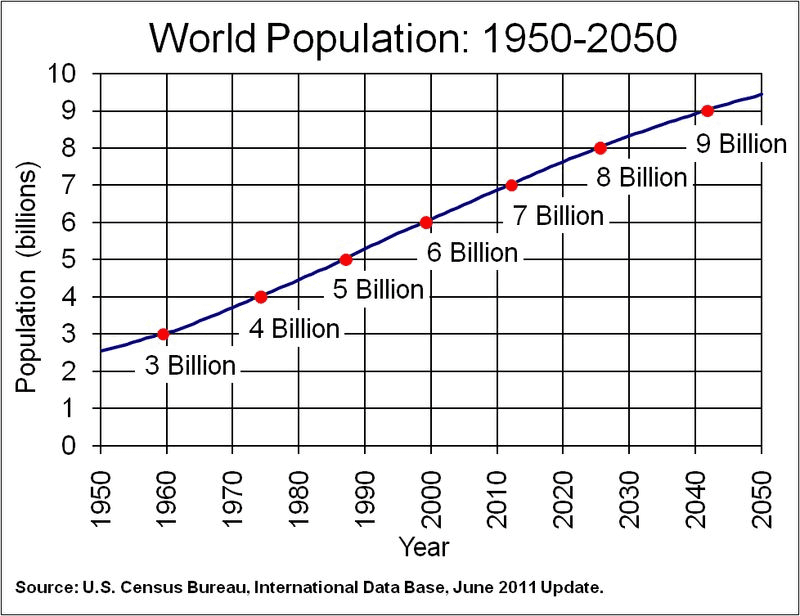
According to population data from the United States Census Bureau, the global population has experienced significant growth over the past century. The increasing population, urbanization, and rising consumer demand are creating continuous pressure on the dairy industry to produce more milk efficiently.
[Image Suggestion: Global population growth chart from 1920–2025]
To meet growing dairy demand, farms must increase productivity while controlling costs related to:
Labor
Feed
Energy
Water resources
Animal health management
Traditional dairy farming methods often rely heavily on manual labor and experience-based management. While these methods can work for small farms, they become difficult to maintain as herd sizes increase.
Modern dairy farms are therefore investing in advanced dairy farm equipment, automation systems, and precision livestock technologies to improve efficiency, consistency, and sustainability.
Why Modern Dairy Farms Need Advanced Equipment
Running a successful modern dairy farm requires much more than feeding cows and collecting milk.
A modern dairy operation depends on the integration of:
Efficient feeding systems
Reliable milking equipment
Comfortable barn environments
Effective manure management
Digital herd monitoring systems
The right dairy farming equipment directly influences:
Milk production consistency
Feed efficiency
Labor costs
Animal welfare
Farm profitability
Whether managing 100 cows or thousands of cows, selecting suitable equipment helps farmers create a more efficient and sustainable production system.
Modern dairy Farm equipment has evolved from simple mechanical tools into intelligent farming solutions.
Examples include:
However, choosing equipment is not simply about purchasing the most advanced technology. The best solution depends on:
Herd size
Farm layout
Climate conditions
Labor availability
Feed resources
Future expansion plans
Our Experience With Dairy Farm Equipment Solutions
At AIG Machinery, we work with agricultural equipment manufacturers, industry partners, and dairy professionals to understand the practical challenges faced by modern farms.
Through communication with farm operators, we have found that most dairy challenges are connected rather than isolated.
The main operational problems include:
No.
Common Challenge
Main Cause
Impact
1
Feed quality inconsistency
Poor mixing, incorrect ration preparation
Lower milk production and higher feed cost
2
High labor cost
Manual feeding and cleaning
Higher operating expenses
3
Heat stress
Poor ventilation and insufficient cooling
Reduced milk yield and fertility
4
Equipment downtime
Poor maintenance or wrong equipment selection
Production interruptions
In many dairy farms, improving efficiency starts with three key areas:
1. Feed Preparation and Distribution
A properly selected TMR mixer helps ensure every cow receives a balanced ration.
Benefits include:
Better feed uniformity
Reduced feed sorting
Lower feed waste
Improved rumen health
2. Cow Comfort and Environmental Control
Healthy cows require a comfortable environment.
Important factors include:
Proper airflow
Clean bedding
Temperature control
Reduced humidity
3. Automation and Daily Management
Automation reduces repetitive labor and improves management accuracy.
Examples:
Automatic feeding robots
Smart monitoring systems
Automatic manure scrapers
The goal is not simply selling machines, but matching the right equipment solution with the farm’s actual operating requirements.
Why Quality Dairy Farm Equipment Matters
Modern dairy farms operate in an increasingly competitive environment.
Farmers face:
Rising feed prices
Labor shortages
Higher milk quality requirements
Increasing animal welfare expectations
High-quality dairy farm equipment helps solve these challenges by improving efficiency throughout the entire production process.
How Modern Feeding Equipment Saves Labor
Feeding is one of the most important daily operations in dairy farming.
A complete feeding workflow includes:
A complete dairy equipment system can be divided into several major categories.
Equipment Category
Main Function
Key Benefits
Feeding Equipment
Mixing and distributing feed
Better nutrition consistency and lower waste
Milking Equipment
Milk extraction
Improved hygiene and efficiency
Milk Cooling Equipment
Rapid milk cooling
Maintains milk quality
Dairy Barn Equipment
Cow comfort management
Improves animal welfare
Ventilation Equipment
Temperature and airflow control
Reduces heat stress
Manure Management Equipment
Waste collection and processing
Improves sanitation
Smart Monitoring Equipment
Data collection and analysis
Supports precision farming
Dairy Feeding Equipment and TMR Mixer: The Foundation of Efficient Milk Production
Feed management is one of the most important factors affecting dairy farm profitability. Feed usually represents the largest daily operating expense, and inefficient feeding can directly impact milk yield, feed conversion efficiency, and herd health.
Traditional feeding methods often depend on manual weighing, mixing, and distribution. As herd size increases, this approach creates challenges including inconsistent rations, higher labor requirements, and increased feed waste.
Modern dairy feeding equipment improves feeding accuracy by integrating feed preparation, mixing, transportation, and distribution into a more efficient workflow.
Feeding Process
Traditional Method
Modern Equipment Solution
Main Improvement
Feed ingredient preparation
Manual loading and measurement
Digital weighing system and loader
More accurate ingredients
Feed mixing
Manual mixing or simple equipment
TMR mixer
Uniform nutrient distribution
Feed transportation
Wheelbarrow or tractor
Feed wagon/feed delivery system
Faster operation
Feed distribution
Manual spreading
Feed spreader or feeding robot
Consistent feed availability
Feed push-up
Manual labor
Automatic feed pusher
Reduced repetitive work
TMR Mixer: The Core Machine for Modern Dairy Feeding
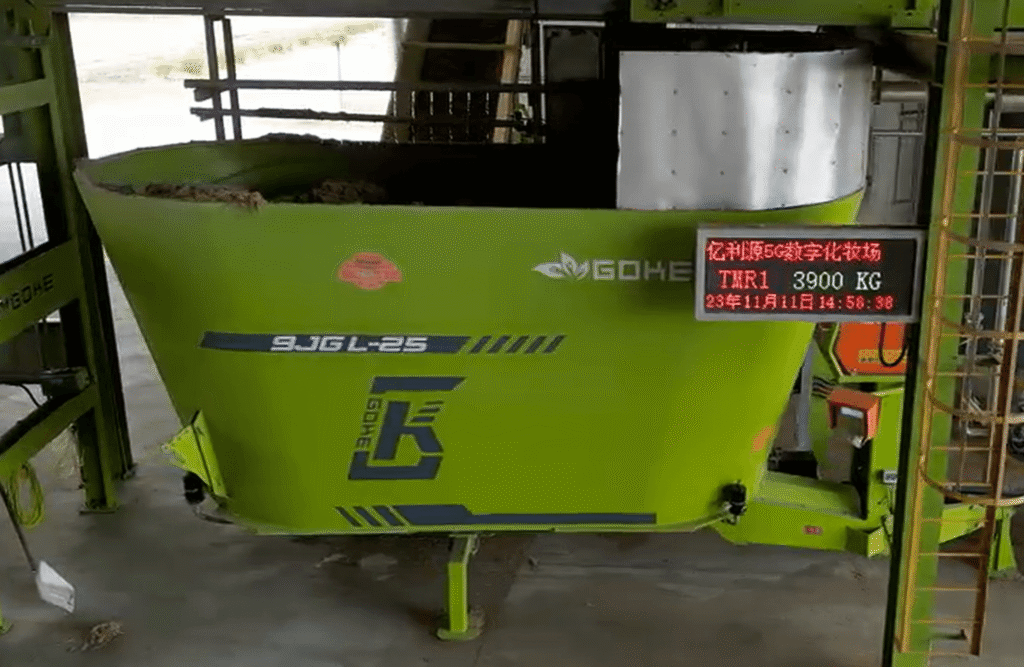
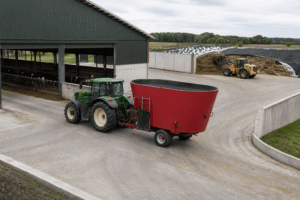
A TMR mixer (Total Mixed Ration Mixer) combines forage, silage, grains, protein supplements, minerals, and vitamins into a complete balanced ration.
The main purpose of a TMR mixer is to ensure that every cow receives similar nutritional value in every bite, reducing selective feeding behavior.
Provides consistent nutrient intake across the herd
Reduced feed sorting
Prevents cows from selecting only high-energy ingredients
Lower feed waste
Improves feed cost efficiency
Reduced labor requirement
Combines multiple feeding steps into one process
Improved rumen health
Supports stable milk production
Types of TMR Mixers
Different dairy farms require different mixer designs depending on herd size, feed ingredients, and farm layout.
TMR Mixer Type
Main Features
Advantages
Suitable Farms
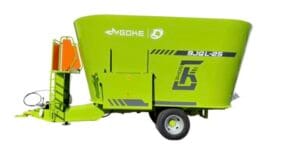
Vertical TMR Mixer
Vertical auger design with strong cutting ability
Handles long fiber forage and high dry matter diets
Medium and large farms
Horizontal TMR Mixer
Horizontal auger system with fast mixing speed
High-volume mixing and efficient batch production
Large dairy farms
Stationary TMR System
Central feeding kitchen with fixed equipment
High automation and accurate feed distribution
Large commercial dairy farms
Dairy Milking Equipment: Improving Milk Quality and Labor Efficiency
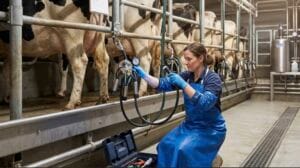
Milking is one of the most critical daily operations in dairy production. A modern milking system must balance three objectives:
Efficient milk collection
Strict hygiene control
Protection of cow udder health
The right dairy milking equipment reduces labor requirements while improving milk quality and production consistency.
Comparison of Dairy Milking Systems
Milking System
Typical Farm Size
Main Features
Advantages
Pipeline Milking System
Small and medium farms
Milk transported through pipelines directly to storage tank
Lower investment, improved hygiene
Herringbone Milking Parlor
Medium farms
Cows positioned at an angle for milking
Good efficiency and easy operation
Parallel Milking Parlor
Medium to large farms
Cows stand closely together
Higher throughput and better space utilization
Rotary Milking System
Large commercial farms
Rotating platform allows continuous milking
Very high efficiency
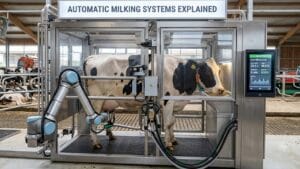
Robotic Milking System
Advanced farms
Automatic cow identification and milking
24-hour operation and individual monitoring
Key Technologies in Modern Milking Systems
Technology
Function
Benefit
Automatic Cluster Removal (ACR)
Removes teat cups automatically when milk flow decreases
Prevents overmilking and protects udder health
Milk Metering System
Records milk yield and production changes
Supports herd performance analysis
Automatic Cleaning System
Cleans pipelines and equipment automatically
Maintains hygiene and reduces contamination risk
Dairy Barn Equipment: Creating a Comfortable Cow Environment
Cow comfort has a direct impact on feed intake, milk production, fertility, and animal lifespan.
Modern dairy barn equipment focuses on creating an environment where cows can rest comfortably, maintain good hygiene, and reduce physical stress.
Equipment
Main Function
Benefit
Stall System
Provides proper resting space
Improves cow comfort and reduces injuries
Bedding Management System
Maintains clean and dry resting areas
Improves hygiene and udder health
Automatic Cow Brush
Provides grooming and comfort
Reduces stress and improves animal welfare
Automatic Curtains
Controls barn airflow and temperature
Improves environmental conditions
Dairy Ventilation Equipment: Managing Heat Stress
Heat stress is one of the biggest challenges affecting dairy productivity, especially in hot and humid regions.
When cows experience heat stress, common consequences include reduced feed intake, lower milk production, and reduced reproductive performance.
A proper ventilation system helps remove heat, moisture, ammonia, and dust from the barn environment.
Ventilation Equipment
Function
Main Benefits
HVLS Fans
Move large volumes of air slowly
Large coverage area and energy efficiency
Circulation Fans
Improve airflow in specific areas
Better air movement
Sprinkler Cooling Systems
Reduce body temperature
Helps cows maintain normal production
Evaporative Cooling Systems
Reduce barn temperature
Effective in hot climates
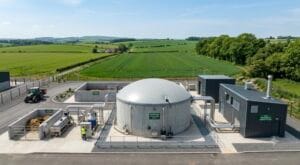
Manure Management Equipment: Improving Farm Hygiene and Sustainability
Large dairy farms produce significant manure volumes every day. Efficient manure management improves barn cleanliness, environmental compliance, and fertilizer utilization.
Equipment
Function
Farm Benefit
Automatic Alley Scraper
Removes manure from walking areas
Cleaner barns and reduced labor
Slurry Pump
Transfers liquid manure
Efficient waste handling
Solid-Liquid Separator
Separates manure components
Produces reusable fertilizer materials
Manure Spreader
Applies organic fertilizer
Improves nutrient recycling
Smart Dairy Equipment and Precision Farming Technology
Modern dairy farms increasingly use digital technologies to improve decision-making.
Smart Technology
Monitored Data
Management Benefit
Smart Collar
Activity, rumination, behavior
Early health and reproduction detection
Electronic Ear Tag
Identification and movement data
Individual cow management
Automated Weighing System
Feed and body weight information
Better feeding control
Farm Management Software
Production and operational data
Data-driven decision making
5. Manure Management and Smart Dairy Technology
Large dairy farms produce significant amounts of manure every day.
Effective manure management is important for:
Farm hygiene
Environmental protection
Fertilizer production
Main Manure Management Equipment
Equipment
Function
Benefit
Automatic Alley Scraper
Removes manure from barn floors
Cleaner barns and lower labor
Slurry Pump
Transfers liquid manure
Efficient waste handling
Solid-Liquid Separator
Separates manure components
Creates reusable fertilizer materials
Manure Spreader
Applies organic fertilizer
Improves nutrient recycling
6. Smart Dairy Equipment and Precision Farming
Modern dairy farms are becoming increasingly data-driven.
Smart dairy technologies include:
Smart collars
Electronic ear tags
Activity sensors
Automated weighing systems
Farm management software
These systems monitor:
Cow activity
Rumination
Body temperature
Feeding behavior
Farm managers can identify problems earlier, including:
Health issues
Reduced feed intake
Reproductive problems
Early detection improves treatment efficiency and reduces economic losses.
7. Dairy Farm Equipment Selection Guide by Herd Size
Different herd sizes require different equipment strategies.
Replace damaged components and conduct professional inspection
Yearly
Complete system evaluation and improvement planning
9. How to Choose the Right Dairy Farm Equipment
Before purchasing equipment, farmers should evaluate:
Herd Size
Equipment capacity should match current needs and future expansion plans.
Farm Layout
Different layouts require different solutions:
Trailed equipment
Stationary systems
Automated feeding solutions
Labor Availability
Where labor costs are high, automation provides stronger economic benefits.
Climate Conditions
Hot climates require stronger ventilation and cooling systems.
After-Sales Support
A reliable supplier should provide:
Spare parts
Technical support
Installation guidance
Maintenance service
Conclusion: Building Efficient and Sustainable Dairy Farms
The future of dairy farming depends on improving productivity while controlling costs and maintaining animal welfare.
Investing in suitable dairy farm equipment allows producers to optimize every stage of milk production:
A professional TMR mixer improves feeding accuracy.
Reliable dairy barn equipment improves cow comfort.
Smart technologies support better decision-making.
However, successful equipment selection is not about choosing the most expensive machines. It is about selecting the right solutions based on:
Herd size
Farm goals
Labor conditions
Climate environment
Long-term development plans
With proper planning, maintenance, and continuous improvement, modern dairy farms can achieve higher efficiency, better animal welfare, and sustainable profitability.
Jasper Jiang
Founder and Marketing Manager
Qingdao AIG Machinery Co., Ltd.
20 years of experience in manufacturing and international business development, working with industrial products, global customers, and equipment supply chains.