Learn how a central kitchen improves TMR consistency, reduces feed losses and labor, and connects the TMR mixer, automatic feeding system, feed pusher robot, and modern dairy equipment.
Feeding dairy cows sounds simple: prepare the ration, mix it, and deliver it to the feed bunk. In practice, however, feeding hundreds or thousands of cows every day is one of the most complex jobs on a modern dairy farm.
A nutritionist may formulate an excellent ration, but cows only benefit if the farm delivers that ration accurately and consistently. Small changes in silage moisture, loading weight, mixing time, ingredient order, or feed delivery can change what cows actually eat.
That is where a central feeding kitchen becomes useful.
Instead of having several mobile mixers independently load, mix, transport, and distribute feed, a centralized system brings ingredient storage, weighing, mixing, quality control, and feed dispatch into one dedicated area.
For beginners, the easiest way to understand the idea is:
Traditional feeding:
Ingredient storage → loader → mobile TMR mixer → barn → next batch
Centralized feeding:
Ingredient storage → weighing → stationary TMR mixer → finished TMR → delivery wagon → barn
The main objective is not simply automation. It is repeatability.
Research on commercial dairy herds has shown that better consistency in delivered TMR can be associated with higher milk production and improved feed efficiency. One study reported approximately 1.2 kg more milk per cow per day and a 2.6% improvement in milk-production efficiency in herds with more consistent TMR delivery.
These figures should not be treated as guaranteed results from installing new equipment. Milk response depends on genetics, ration quality, cow health, climate, stocking density, management, and the farm’s starting level of feeding accuracy.
What Is a Central Feeding Kitchen?
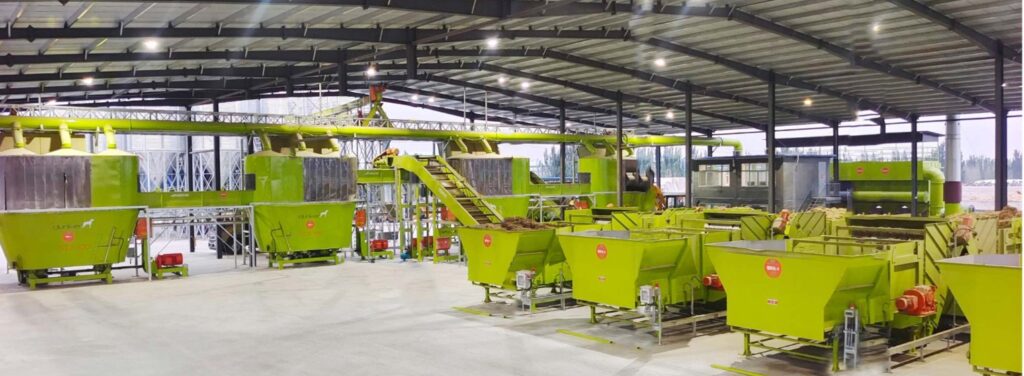
A central feeding kitchen is a dedicated feed-preparation center where major ingredients are stored, weighed, processed, mixed, checked, and dispatched to different cow groups.
It can be very simple or highly automated.
A basic installation may use a loader, stationary mixer, electronic scale, and delivery wagon. A larger operation may add conveyors, automatic ingredient bins, mineral dosing, moisture testing, recipe software, autonomous delivery equipment, and robotic feed pushing.
| Component | Main Function | Key Measurement | Why It Matters |
|---|---|---|---|
| Silage storage | Stores forage | t or t DM | Main forage supply |
| Commodity bays | Stores grain/by-products | t | Reduces loader travel |
| Mineral bins | Stores small ingredients | kg | Supports accurate dosing |
| Load cells | Weigh ingredients | kg/batch | Improves batch accuracy |
| TMR mixer | Mixes ration | m³ or t/batch | Determines batch capacity |
| Moisture testing | Measures forage DM | % | Corrects as-fed quantities |
| Conveyor/auger | Moves ingredients | t/h | Reduces handling time |
| Delivery wagon | Transports finished feed | m³/load | Separates mixing from delivery |
| Feeding software | Controls recipes | kg, %, time | Improves traceability |
| feed pusher robot | Pushes feed toward cows | cycles/day | Maintains feed access |
A central feeding kitchen is particularly useful when a farm handles high feed volumes, multiple ration groups, long travel distances, or expensive ingredients that require precise weighing.
Why TMR Consistency Matters
A TMR is designed so every mouthful contains a similar balance of forage, grain, protein, minerals, and other ingredients.
In reality, several things can cause the ration to drift away from its formulation.
| Source of Variation | Example | Possible Result |
|---|---|---|
| Silage moisture | 35% DM drops to 32% DM | Incorrect as-fed weight |
| Loading error | Too much corn or concentrate | Ration becomes more fermentable |
| Under-loading forage | Less effective fiber | Rumen balance changes |
| Mixing too little | Poor distribution | Uneven nutrient intake |
| Mixing too long | Excess particle reduction | More sorting or reduced effective fiber |
| Delayed delivery | Bunk becomes empty | Irregular feeding behavior |
| Poor push-up | Feed moves out of reach | Reduced feed accessibility |
The purpose of a TMR feeding system is therefore not just to mix ingredients together. It is to deliver a repeatable ration throughout the day.
University feeding guidance also emphasizes that TMR dry matter and particle distribution influence sorting behavior. A ration that is too dry or poorly structured may allow cows to select some ingredients while avoiding others.
For beginners, think of it this way:
The ration on the computer is not always the ration the cow eats.
The job of the feeding system is to keep those two as close as possible.
Moisture Changes Can Create Large Feeding Errors
One of the clearest examples is forage moisture.
Suppose a ration requires 4,000 kg of silage dry matter.
If the feeding program assumes the silage is 35% dry matter:
4,000 ÷ 0.35 = 11,429 kg as-fed silage
But after rainfall, the actual silage tests at 32% dry matter:
4,000 ÷ 0.32 = 12,500 kg as-fed silage
The difference is:
12,500 − 11,429 = 1,071 kg
| Parameter | Original Assumption | Actual Condition | Difference |
|---|---|---|---|
| Required silage DM | 4,000 kg | 4,000 kg | 0 |
| Silage DM | 35% | 32% | -3 percentage points |
| Required as-fed silage | 11,429 kg | 12,500 kg | +1,071 kg |
A moisture shift of only three percentage points creates more than 1 tonne of difference in this example.
This is one reason centralized moisture testing is valuable. Instead of several operators making different decisions, one updated dry-matter result can be applied to subsequent batches from the same central feeding kitchen.
How Much Feed Does a Dairy Farm Need?
A good feeding system starts with dry matter intake, not simply wet feed weight.
For an easy planning example, assume a group of lactating cows consumes 22 kg of dry matter per cow per day.
This is only an example. Actual dry matter intake depends on cow size, milk production, stage of lactation, environmental conditions, ration digestibility, health, and management.
If the finished ration is 50% dry matter:
| Lactating Cows | Assumed DMI | Total DM/Day | Finished TMR at 50% DM |
|---|---|---|---|
| 100 | 22 kg | 2.2 t | 4.4 t/day |
| 300 | 22 kg | 6.6 t | 13.2 t/day |
| 500 | 22 kg | 11.0 t | 22.0 t/day |
| 1,000 | 22 kg | 22.0 t | 44.0 t/day |
| 2,000 | 22 kg | 44.0 t | 88.0 t/day |
| 3,000 | 22 kg | 66.0 t | 132.0 t/day |
At 2,000 cows, this example reaches 88 tonnes of finished feed every day.
That is why feeding on a large dairy should be treated as a production process rather than simply another tractor job.
Choosing the Right TMR Mixer Capacity
Suppose a stationary TMR mixer has a usable as-fed capacity of 10 tonnes per batch.
| Herd Size | Example TMR/Day | Usable Mixer Load | Minimum Loads/Day |
|---|---|---|---|
| 100 | 4.4 t | 10 t | 1 |
| 300 | 13.2 t | 10 t | 2 |
| 500 | 22.0 t | 10 t | 3 |
| 1,000 | 44.0 t | 10 t | 5 |
| 2,000 | 88.0 t | 10 t | 9 |
| 3,000 | 132.0 t | 10 t | 14 |
These are theoretical minimums.
A real farm may prepare separate diets for:
- fresh cows,
- high-producing cows,
- mid-lactation cows,
- late-lactation cows,
- close-up cows,
- far-off dry cows,
- and replacement heifers.
So a 1,000-cow farm does not necessarily prepare one 1,000-cow ration.
This is an important design lesson:
TMR mixer sizing must consider both tonnes per day and recipes per day.
Calculate Kitchen Throughput, Not Just Mixer Volume
Mixer size alone does not tell you whether the feeding system can keep up.
Assume one batch needs:
| Process | Time |
|---|---|
| Loading | 8 min |
| Mixing | 6 min |
| Discharge | 4 min |
| Total cycle | 18 min |
Then:
60 ÷ 18 = 3.33 batches/hour
With a usable batch of 10 tonnes:
3.33 × 10 = 33.3 t/hour theoretical output
| Parameter | Example |
|---|---|
| Usable batch | 10 t |
| Cycle time | 18 min |
| Batches/hour | 3.33 |
| Theoretical capacity | 33.3 t/h |
Real capacity will be lower because of recipe changes, waiting time, cleaning, ingredient shortages, maintenance, and operator interruptions.
For practical central feeding kitchen design, use a safety margin rather than assuming the theoretical maximum will be available all day.
Central Kitchen vs. Conventional Mobile Mixing
For many farms, the biggest efficiency improvement comes from separating mixing from transportation.
| Feature | Mobile Mixing | Central Feeding Kitchen | Practical Difference |
|---|---|---|---|
| Loading | Loader fills mobile mixer | Central loading area | Easier to standardize |
| Mixing | Happens in mobile unit | Stationary mixing | Mixer can stay productive |
| Transport | Mixer travels to barn | Delivery vehicle transports TMR | Less mixer travel |
| Delivery | Mixer distributes ration | Dedicated wagon/vehicle | Tasks can overlap |
| Ingredient weighing | Operator controlled | Central weighing | Better consistency |
| Micro ingredients | Often manual | Controlled/automated | Better dosing control |
| Moisture correction | Operator dependent | Centralized | Easier ration adjustment |
| Batch records | Limited | Digital possible | Better traceability |
| Expansion | Add more mobile units | Add mixer/delivery capacity | Easier to scale in stages |
A mobile mixer is still a very practical solution for many small and medium farms. A central feeding kitchen becomes more attractive as daily tonnage, feeding groups, travel distance, and labor requirements increase.
Labor Efficiency Through Parallel Processing
Consider a mobile mixer with the following cycle:
| Task | Time |
|---|---|
| Loading | 15 min |
| Mixing | 8 min |
| Driving to barn | 8 min |
| Distribution | 10 min |
| Return | 8 min |
| Total | 49 min |
For 10 loads:
49 × 10 = 490 minutes
That equals approximately 8.2 hours.
Now separate mixing and delivery.
While a delivery wagon distributes Batch 1, the stationary mixer can prepare Batch 2.
| Time | Stationary Mixer | Delivery Vehicle |
|---|---|---|
| 0–15 min | Prepare Batch 1 | Waiting/loading |
| 15–30 min | Prepare Batch 2 | Deliver Batch 1 |
| 30–45 min | Prepare Batch 3 | Deliver Batch 2 |
| 45–60 min | Prepare Batch 4 | Deliver Batch 3 |
This is similar to a small production line.
The key is not that every task suddenly becomes faster. The advantage is that two tasks can happen at the same time.
Optimized Example Layout for a Central TMR Feeding Kitchen
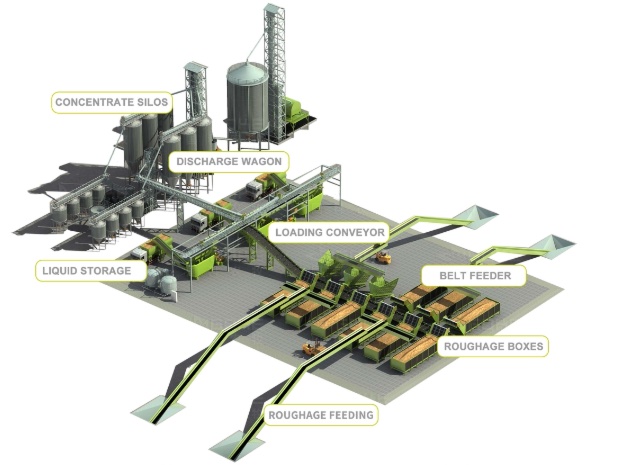
The layout of a central feeding kitchen can affect labor and fuel consumption just as much as equipment selection.
For beginners, the easiest planning rule is:
Raw ingredients should move in one direction, finished feed should move in another, and the two traffic streams should cross as little as possible.
Recommended Process Flow
INCOMING FEED TRUCKS
        ↓
+---------------------------+
| Raw Material Receiving    |
+---------------------------+
        ↓
+---------------------------+
| Silage Bunkers            |
| Commodity Bays            |
| Mineral / Additive Room   |
+---------------------------+
        ↓
+---------------------------+
| Moisture Testing          |
| Recipe & Inventory Control|
+---------------------------+
        ↓
+---------------------------+
| Ingredient Loading        |
| Weighing / Dosing         |
+---------------------------+
        ↓
+---------------------------+
| Stationary TMR Mixer      |
+---------------------------+
        ↓
+---------------------------+
| Finished TMR Buffer /     |
| Direct Discharge Point    |
+---------------------------+
        ↓
+---------------------------+
| Delivery Wagon /          |
| Automatic Feeding System  |
+---------------------------+
        ↓
     DAIRY BARNS
        ↓
+---------------------------+
| Feed Pusher Robot         |
+---------------------------+
This arrangement creates a simple process:
Receiving → Storage → Testing → Weighing → Mixing → Dispatch → Feeding
Recommended Functional Zones
| Zone | Main Function | Key Design Goal | Common Mistake |
|---|---|---|---|
| Receiving | Unload raw materials | Easy truck access | Trucks blocking feed delivery |
| Silage storage | Store forage | Short loader distance | Kitchen too far from bunkers |
| Commodity bays | Store concentrates | Direct loader access | Bays scattered around farm |
| Micro-ingredient room | Store minerals/additives | Dry, controlled area | Manual bags stored outdoors |
| Testing station | Check moisture/DM | Near feed office | Testing far from operators |
| Mixer zone | Prepare TMR | Straight loading path | Loader making tight turns |
| Dispatch zone | Load delivery vehicles | Fast in-and-out movement | Delivery waiting for mixer |
| Robot charging | Support automation | Protected, accessible location | Charging station blocks feed alley |
| Maintenance zone | Service equipment | Safe side access | No room to remove augers or motors |
Practical Layout Rule: Keep High-Frequency Movements Short
Suppose a loader handles 100 tonnes of ingredients per day.
If poor layout adds 150 m of unnecessary travel per loading cycle and the loader performs 30 cycles:
150 m × 30 = 4,500 m/day
That equals:
4.5 km/day
Over 365 days:
4.5 × 365 = 1,642.5 km/year
This simple example shows why the central feeding kitchen should be positioned close to the highest-volume ingredients, especially silage and bulk commodities.
Separate Three Traffic Types
| Traffic | Preferred Route | Main Risk if Mixed |
|---|---|---|
| Ingredient trucks | Entrance → receiving → exit | Congestion |
| Loaders | Storage ↔ weighing/mixer | Extra fuel and waiting |
| Finished-feed vehicles | Mixer → barns → return | Delayed feeding |
Where site conditions allow, use one-way traffic.
A practical design is:
Incoming truck lane → unloading → exit
separated from:
Mixer discharge → feed-delivery lane → barns
This reduces reversing, crossing, and waiting.
Recommended Area Relationship
For a beginner-friendly layout, place the highest-use areas closest together:
| Facility | Relative Position to Mixer | Reason |
|---|---|---|
| Silage bunkers | Very close | Highest-volume ingredient |
| Commodity bays | Very close | Frequent loader movement |
| Mineral room | Close | Frequent small additions |
| Testing room | Close | Fast moisture adjustment |
| Delivery lane | Directly beside discharge | Avoid delivery waiting |
| Maintenance area | Side/rear access | Keep repairs away from production flow |
| Incoming truck road | Separate side | Avoid feed-delivery traffic |
| Barn access road | Opposite dispatch side | Create one-direction feed flow |
The aim is to create a U-shaped or straight-through flow, rather than a layout where vehicles constantly return through the same intersection.
Moisture Testing and Quality Control Area
A small testing station can have a disproportionate impact on ration accuracy.
| Equipment | Measurement | Practical Use |
|---|---|---|
| Moisture tester | % moisture | Correct forage weights |
| Drying oven | % DM | Reference testing |
| NIR system | DM/nutrient estimates | Faster routine analysis |
| Feed scale | kg | Verify ingredient quantities |
| Particle separator | Particle distribution | Check TMR structure |
| Software terminal | Recipe/batch data | Record changes |
The important point is not to buy every technology immediately.
A beginner central feeding kitchen can start with reliable weighing and routine dry-matter checks, then add more automation as herd size and feeding complexity increase.
Feed Shrink Can Become Expensive Quickly
Feed shrink includes losses from storage, handling, spoilage, wind, rain, loader spillage, birds, rodents, and weighing errors.
Consider a farm handling 10,000 tonnes of purchased feed per year at an example average value of $250/t.
| Shrink | Feed Lost | Example Value Lost |
|---|---|---|
| 2% | 200 t | $50,000 |
| 4% | 400 t | $100,000 |
| 6% | 600 t | $150,000 |
| 8% | 800 t | $200,000 |
These are calculation examples rather than industry-average shrink rates.
Even a 1-percentage-point reduction equals:
10,000 t × 1% = 100 t
At $250/t:
100 × $250 = $25,000/year
This is why covered commodity storage, accurate weighing, good inventory control, and disciplined loader operation can justify attention even before advanced automation is installed.
Integrating an Automatic Feeding System
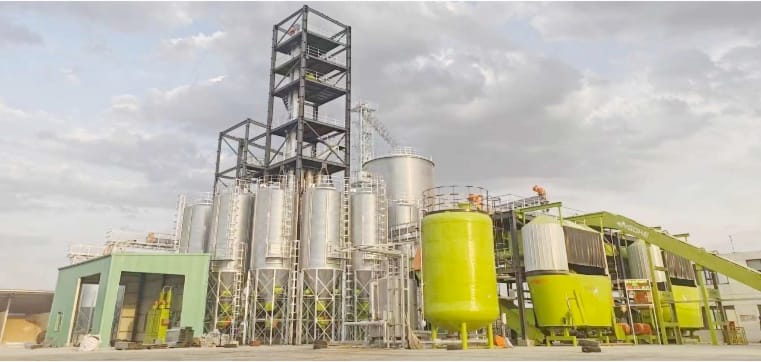
A central feeding kitchen does not automatically mean the farm is fully automated.
There are several levels.
| Level | Loading | Mixing | Delivery | Feed Push-Up |
|---|---|---|---|---|
| Manual/mechanized | Loader | Stationary mixer | Tractor/wagon | Tractor/manual |
| Semi-automatic | Loader/conveyor | Programmed mixer | Delivery wagon | Feed pusher robot |
| Highly automated | Automated bins | Automatic mixing | Automated delivery | Robot |
| Fully integrated | Automated | Automated | Automated | Automated |
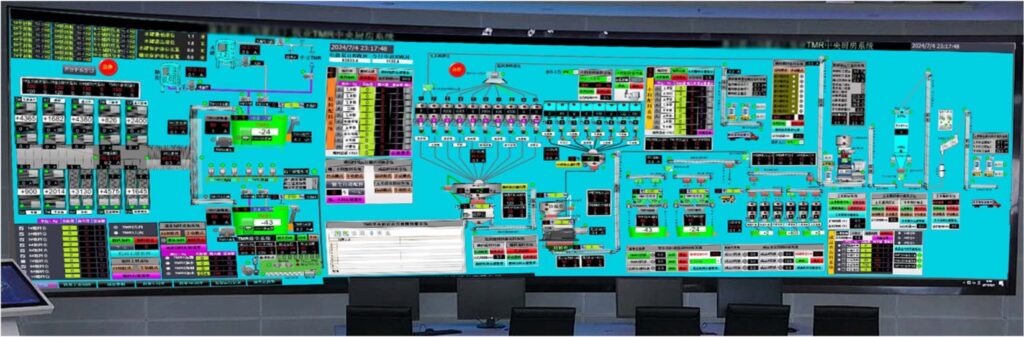
An automatic feeding system may include ingredient bins, conveyors, automatic weighing, automated recipe selection, stationary mixers, autonomous delivery vehicles, rail-fed distribution, and feed-pushing robots.
The best system is not necessarily the one with the highest automation level.
It is the one that reduces the farm’s actual bottlenecks.
Why a Feed Pusher Robot Matters
Preparing a perfect ration is only half the job.
After feed is delivered, cows push feed away from the bunk as they eat. If the ration stays out of reach for long periods, feed availability becomes less consistent.
A feed pusher robot can repeatedly move feed back toward the cows without requiring a tractor and operator each time.
| Method | Labor | Frequency Potential | Main Advantage |
|---|---|---|---|
| Manual push | High | Low | Lowest equipment cost |
| Tractor push | Medium | Moderate | Fast for large alleys |
| Feed pusher robot | Low repetitive labor | High | Consistent scheduled push-up |
University extension guidance for some dairy groups recommends maintaining feed availability for most of the day and frequent feed push-up.
The practical value of automation is consistency. A robot does not forget a scheduled push because another farm job suddenly becomes urgent.
Stationary Mixer vs. Mobile Mixer
A stationary mixer is not automatically cheaper.
Compare the complete cost.
| Cost Factor | Mobile TMR Mixer | Stationary Mixer |
|---|---|---|
| Energy | Diesel/PTO | Usually electricity |
| Tractor required | Yes | No during mixing |
| Mobility | Excellent | None |
| Delivery | Built into mixer | Separate vehicle needed |
| Infrastructure | Lower | Higher |
| Mixer utilization | Interrupted by transport | Higher potential |
| Expansion | Add/upgrade mixer | Add mixer or delivery capacity |
| Best use | Flexible feeding | High-volume centralized feeding |
A smaller dairy with compact facilities may benefit more from a conventional mobile machine.
A large dairy feeding 100+ tonnes per day may gain more from keeping the TMR mixer continuously productive.
How to Size the Central Feeding Kitchen
A practical design starts with five numbers:
cows → dry matter → as-fed tonnes → batches → hours
Example for 2,000 lactating cows:
Daily Dry Matter
2,000 × 22 kg = 44,000 kg DM/day
Finished Feed at 50% DM
44,000 ÷ 0.50 = 88,000 kg
= 88 t/day
Required Output
If feeding production must be completed within 6 hours:
88 ÷ 6 = 14.7 t/h
Add an example 25% capacity allowance:
14.7 × 1.25 = 18.4 t/h
| Design Item | Example |
|---|---|
| Lactating cows | 2,000 |
| Assumed DMI | 22 kg/day |
| Dry matter required | 44 t/day |
| TMR dry matter | 50% |
| Finished feed | 88 t/day |
| Production window | 6 h |
| Minimum average output | 14.7 t/h |
| Example +25% margin | 18.4 t/h |
This method is much more reliable than selecting equipment only because a manufacturer labels a machine “for 2,000 cows.”
Equipment Selection Checklist
| Parameter | Unit | Why It Matters |
|---|---|---|
| Total animals | head | Defines total demand |
| Lactating cows | head | Main feed load |
| DMI | kg/cow/day | Determines DM demand |
| TMR dry matter | % | Converts DM to as-fed tonnes |
| Total feed | t/day | Defines daily system capacity |
| Number of recipes | diets/day | Determines batch complexity |
| Mixer capacity | t/batch | Determines load count |
| Cycle time | min | Determines throughput |
| Feeding window | h | Sets minimum output |
| Loader capacity | t/h | Prevents loading bottleneck |
| Conveyor capacity | t/h | Prevents ingredient bottleneck |
| Discharge rate | t/h | Prevents mixer waiting |
| Delivery capacity | t/h | Prevents finished-feed backlog |
| Future herd size | head | Avoids early undersizing |
Remember one rule:
The entire system is only as fast as its slowest component.
A mixer producing 30 t/h does not create a 30 t/h central feeding kitchen if the loader or conveyor can supply only 15 t/h.
When Does a Central Feeding Kitchen Make Sense?
There is no universal minimum cow number.
Instead, look for operational pressure.
| Farm Situation | Centralization Benefit |
|---|---|
| High daily feed tonnage | Higher mixer utilization |
| Many cow groups | Better recipe control |
| Multiple barns | Centralized feed preparation |
| High labor cost | Greater automation value |
| Long travel routes | Less mobile mixer travel |
| Frequent moisture variation | Easier ration correction |
| Expensive additives | More precise dosing |
| Expansion planned | Easier capacity planning |
| Need for records | Digital batch traceability |
A compact 500-cow dairy with affordable labor may not need one.
A 1,500-cow dairy spread across several barns may gain considerable value.
The right decision depends on:
tonnes/day + recipes/day + labor + travel distance + shrink + equipment cost + future expansion
Simple ROI Example
Suppose a dairy estimates these improvements after centralizing feeding.
| Saving Category | Current Annual Cost | Assumed Improvement | Estimated Saving |
|---|---|---|---|
| Feed shrink | $2,000,000 | 1% | $20,000 |
| Labor | $180,000 | 20% | $36,000 |
| Fuel | $100,000 | 25% | $25,000 |
| Maintenance | $80,000 | 20% | $16,000 |
| Total | — | — | $97,000/year |
If additional investment equals $500,000:
$500,000 ÷ $97,000 = 5.15 years
This is a simplified example, not a promise of ROI.
A real investment analysis should also include electricity, financing, depreciation, maintenance, replacement parts, labor changes, expected service life, salvage value, and downtime risk.
Do Not Ignore Backup Capacity
Centralization improves efficiency, but it also creates a single critical production hub.
If one of several mobile mixers fails, another unit may temporarily cover part of the workload.
If a large central feeding kitchen stops, a much larger share of the farm may be affected.
Large facilities should therefore consider:
| Critical System | Backup Option |
|---|---|
| Mixer | Secondary mixer or emergency mobile unit |
| Electricity | Generator |
| Control system | Manual override |
| Conveyor | Loader-access backup route |
| Delivery vehicle | Spare wagon/truck |
| Feed software | Offline recipe records |
| Scale/load cells | Verification scale |
| Water/liquid system | Manual bypass |
A good feeding system is not only efficient when everything works. It should also have a realistic plan for equipment failure.
Practical Recommendations for Beginners
If you are evaluating a central feeding kitchen for the first time, do not start by asking, “Which machine should I buy?”
Start with:
- How many tonnes of feed do we handle each day?
- How many different diets do we prepare?
- How much time does feeding currently require?
- How far does the mixer travel?
- Where do loading errors happen?
- How often does forage moisture change?
- Which step creates the biggest delay?
- How many cows do we expect to feed five years from now?
After answering those questions, equipment selection becomes much easier.
Final Comparison
| Factor | Mobile TMR Feeding | Centralized Feeding | Automated Centralized Feeding |
|---|---|---|---|
| Initial investment | Lower | Higher | Highest |
| Flexibility | High | Medium | Medium |
| Mixing consistency | Operator dependent | High | Very high |
| Batch records | Basic | Digital possible | Automatic |
| Repetitive labor | Higher | Medium | Lower |
| Mixer travel | High | None | None |
| Delivery | Mixer itself | Separate wagon | Automated/separate |
| Micro dosing | Usually manual | Controlled | Automated |
| Moisture correction | Operator based | Centralized | Software controlled |
| Scalability | Medium | High | Very high |
| Maintenance complexity | Medium | High | Highest |
| Backup planning | Important | Very important | Critical |
Conclusion
A central feeding kitchen is best understood as a controlled feed-production hub rather than simply a large building with a mixer inside.
Its value comes from bringing ingredient storage, moisture testing, weighing, mixing, recipe management, dispatch, and feeding records into a repeatable process.
For a small farm, a mobile TMR mixer may still provide the best balance of flexibility and investment.
As herd size and daily feed volume grow, however, feeding can evolve into:
Loader + TMR Mixer
then:
Central Feeding Kitchen + Stationary Mixer + Delivery Wagon + Feed Pusher Robot
and eventually:
Central Feeding Kitchen + Automatic Feeding System + Digital Feed Management
The same principle applies at every stage: technology should solve a real operational problem.
A good feeding system should help the farm deliver the correct ration, at the correct weight, to the correct cow group, at the correct time—and do it consistently every day.
That is ultimately what makes modern dairy equipment valuable: not complexity, but better control of the daily work that directly affects cow performance.