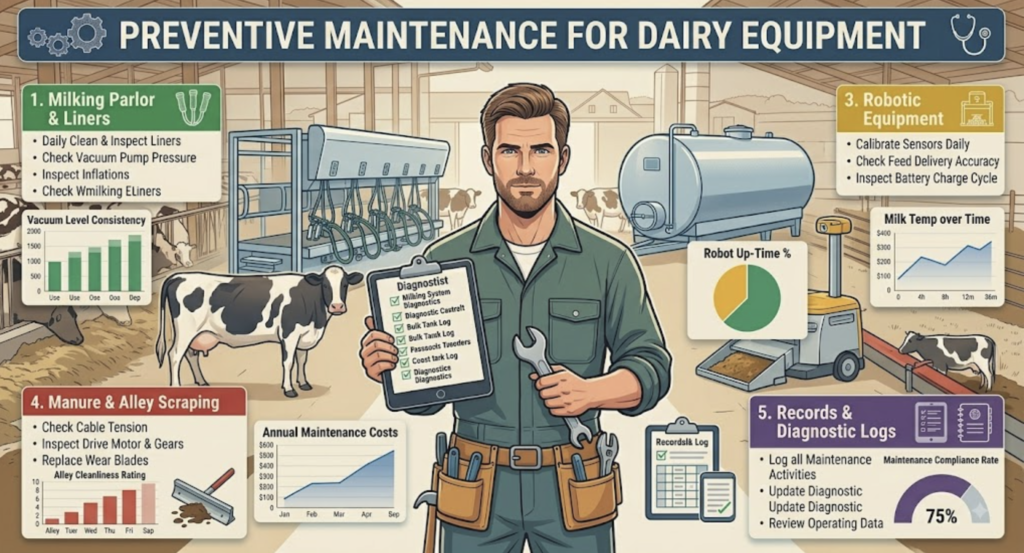
Preventive Maintenance for Dairy Equipment is a planned system of inspection, cleaning, lubrication, adjustment, testing, and parts replacement before a machine fails. On a dairy farm, this matters because feeding, milking, cooling, ventilation, manure handling, and water systems operate every day. When a critical machine stops, cows cannot simply wait until tomorrow.
For beginners, the goal is not to build a complicated maintenance department. Start with the machines that would create the biggest problem if they failed, follow manufacturer service intervals, inspect them regularly, and keep simple records.
A practical maintenance process is:
Inspect → Clean → Lubricate → Adjust → Replace → Record → Review
The Food and Agriculture Organization (FAO) describes preventive maintenance as a planned system that includes scheduled inspection, lubrication, machine adjustment, replacement of worn parts, recordkeeping, and periodic review.
Quick Answer: What Should a Dairy Maintenance Program Include?
A good dairy maintenance program should prioritize equipment by failure risk, follow manufacturer service intervals, combine short daily inspections with hour-based servicing, keep critical spare parts, record completed work, and measure downtime. Feeding, milking, water, and ventilation equipment normally deserve the highest attention because their failure can quickly affect normal farm operation.
| Maintenance Level | Main Work | Typical Examples |
|---|---|---|
| Every shift | Safety and operating check | Guards, leaks, alarms |
| Daily | Visual inspection and cleaning | Mixers, pumps, tractors |
| Weekly | Lubrication and wear checks | Chains, bearings, belts |
| Monthly | Deeper component inspection | Motors, fans, electrical |
| Quarterly | Wear inspection/calibration | Mixer knives, scales |
| Seasonal | Prepare for high-demand periods | Fans, cooling equipment |
| Annual | Full condition review | Critical farm systems |
These intervals are a planning framework, not universal service intervals. The operating manual supplied by the equipment manufacturer should always take priority.
1. What Is Preventive Maintenance for Dairy Equipment and Why Does It Matter?
The simplest difference is timing.
Preventive maintenance happens before failure. Corrective maintenance happens after failure.
That difference is important on dairy farms because many machines are connected directly to animal care.
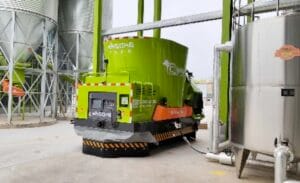
If a field machine fails, some work may occasionally be postponed. If a TMR mixer fails before morning feeding or a vacuum pump stops during milking, the farm immediately has a production problem.
Preventive vs. Corrective Maintenance
| Factor | Preventive Maintenance | Corrective Maintenance |
|---|---|---|
| Timing | Before failure | After failure |
| Work scheduling | Planned | Usually unexpected |
| Parts purchasing | Can be planned | Often urgent |
| Labor | Scheduled | Emergency |
| Downtime | Usually controlled | Potentially significant |
| Wear detection | Early | After damage |
| Main objective | Reduce failure risk | Restore operation |
Preventive maintenance cannot eliminate every breakdown. Its purpose is to reduce avoidable failures and unplanned downtime.
UMass Extension recommends checking fluids, leaks, loose bolts, bearings, belts, chains, filters, tire pressure, unusual noise, and other changes in machine condition.
Rank Equipment by Failure Risk
Not every piece of dairy farm equipment needs the same maintenance priority.
A useful method is:
Maintenance Priority Score = Failure Probability × Operational Impact
Use a simple 1–5 rating for each factor.
| Equipment | Failure Probability | Impact | Example Risk Score | Priority |
|---|---|---|---|---|
| TMR mixer | 3 | 5 | 15 | High |
| Vacuum pump | 2 | 5 | 10 | High |
| Water pump | 2 | 5 | 10 | High |
| Main cooling fan | 3 | 4 | 12 | High |
| Manure scraper | 3 | 3 | 9 | Medium |
| Workshop tool | 2 | 1 | 2 | Low |
These scores are illustrative management examples, not industry benchmarks.
For each high-priority machine, answer four questions:
- What is most likely to fail?
- Which spare parts should be stored?
- Who can repair it?
- What is the backup plan?
That last question is often overlooked.
A strong maintenance plan does not only try to prevent failure. It also prepares the farm for what happens when prevention does not work.
2. How Often Should Dairy Farm Equipment Be Maintained?
There is no single service interval that fits every machine.
Maintenance frequency depends on machine design, operating hours, age, workload, dust, heat, manure exposure, moisture, and manufacturer instructions.
The easiest system is to divide work into daily, weekly, monthly, quarterly, and seasonal tasks.
Master Dairy Farm Preventive Maintenance Checklist
| Equipment | Daily | Weekly | Monthly | Quarterly / Seasonal |
|---|---|---|---|---|
| TMR mixer | Leaks, scale, tires | Grease, chains | Driveline | Knives/scrapers |
| Tractor/loader | Fluids, tires | Grease points | Filters/battery | Full inspection |
| Milking system | Cleaning, vacuum | Hoses/visual wear | Components | System review |
| Ventilation fans | Operation | Cleanliness | Belt/motor | Pre-summer service |
| Manure scraper | Movement/cable | Lubrication | Wear | Drive inspection |
| Water pump | Pressure/leaks | — | Electrical | Pump/system check |
Planning framework only. Actual maintenance intervals should follow the manufacturer’s manual.
This table gives beginners a useful starting point without pretending all machines need identical service.
Use a 5-Minute Daily Walk-Around
A short inspection before starting a machine can catch many obvious problems.
Look for:
- oil or hydraulic leaks;
- damaged hoses;
- loose fasteners;
- damaged guards;
- abnormal tire condition;
- frayed cables;
- unusual vibration;
- overheating;
- burning smells;
- abnormal noise.
A useful sequence is:
Look → Listen → Smell → Check instruments → Compare with normal
The key phrase is compare with normal.
A bearing does not need to fail completely before it becomes a problem. A new vibration, higher operating temperature, slower hydraulic movement, or unusual noise may be the first warning.
Record Maintenance by Machine
A simple record is better than a complicated system nobody updates.
| Date | Equipment | Hours | Problem Found | Action | Next Check |
|---|---|---|---|---|---|
| May 1 | TMR Mixer #1 | 2,450 | Chain loose | Adjusted | May 8 |
| May 3 | Fan #12 | — | Belt cracked | Replaced | Jun 3 |
| May 5 | Tractor #2 | 4,200 | Service due | Oil/filter changed | 4,450 hr |
After several months, these records can answer useful questions:
Which machine has the most downtime?
Which component repeatedly fails?
Are repair intervals becoming shorter?
Is an older machine becoming expensive to maintain?
That is when maintenance records become management information instead of paperwork.
3. How Should Critical Dairy Equipment Be Maintained?
Different machines fail in different ways, so one universal checklist is not enough.
Three systems deserve particular attention: the TMR mixer, milking equipment, and the barn ventilation system.
TMR Mixer Maintenance
Good TMR mixer maintenance goes beyond greasing the PTO shaft.
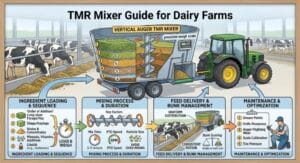
Important components include knives, augers, scrapers, chains, bearings, gearboxes, tires, scales, hydraulic hoses, and driveline parts.
University of Delaware Extension recommends inspecting internal components such as knives, scrapers, and shoes approximately every 90 days, alongside the manufacturer’s maintenance schedule.
| Component | What to Check | Planning Frequency* |
|---|---|---|
| Tires | Pressure/damage | Daily |
| Hydraulic hoses | Leaks/damage | Daily |
| Scale/display | Normal operation | Daily |
| PTO/driveline | Guard and wear | Daily–weekly |
| Grease points | Lubrication | Per manual |
| Chains | Tension and wear | Weekly |
| Knives | Wear/sharpness | Regular + deeper 90-day check |
| Scrapers/shoes | Wear/clearance | Regular + deeper 90-day check |
| Auger/flighting | Wear/damage | Periodic |
| Gearbox | Oil/leaks | Per manual |
*Manufacturer instructions take priority.
A mixer can continue operating while worn components gradually reduce mixing quality. The first sign may be longer processing time or less consistent feed rather than a complete mechanical failure.
That makes maintenance a feeding-performance issue, not only a repair issue.
Milking Equipment Maintenance
Milking equipment requires both mechanical maintenance and sanitation.
University of New Hampshire Extension gives useful reference guidance including replacement of hoses and claw gaskets at least every 6 months and pulsator rebuilding approximately 1–2 times per year, while also monitoring vacuum performance.
| Milking Component | Maintenance Focus |
|---|---|
| Vacuum system | Stable operation |
| Pulsators | Function/performance |
| Hoses | Cracks, wear, cleanliness |
| Gaskets | Condition and sealing |
| Claws | Cleanliness and condition |
| Filters | Correct replacement |
| Wash system | Temperature, time, chemistry |
| Milk-contact surfaces | Cleanliness |
UNH also provides example cleaning temperatures of approximately 100–110°F (38–43°C) for rinsing and 160–170°F (71–77°C) for the wash stage.
These are useful references, not universal settings. The detergent supplier and milking-system manufacturer should determine the correct procedure for the individual installation.
For beginners:
Milking maintenance = mechanical condition + vacuum performance + cleaning performance
All three matter.
Ventilation System Maintenance
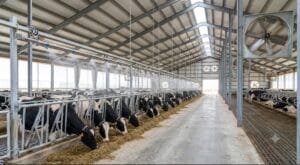
A dirty fan can still spin, which makes ventilation problems easy to miss.
University of Wisconsin–Madison Extension reports that dirty fans, especially dirty shutters, can reduce airflow and efficiency by approximately 10–40%.
| Ventilation Component | Check For |
|---|---|
| Fan blades | Dust/manure buildup |
| Shutters | Dirt/restricted opening |
| Belt | Cracks, tension, wear |
| Pulley | Alignment/wear |
| Guard | Damage/obstruction |
| Motor | Heat/noise |
| Fasteners | Looseness |
| Controls | Correct operation |
| Air inlets | Obstructions |
| Wiring | Visible damage |
The best time to service a ventilation system is before hot weather, not after cows are already experiencing heat stress.
Early Warning Signs: Symptom → Possible Cause → First Check
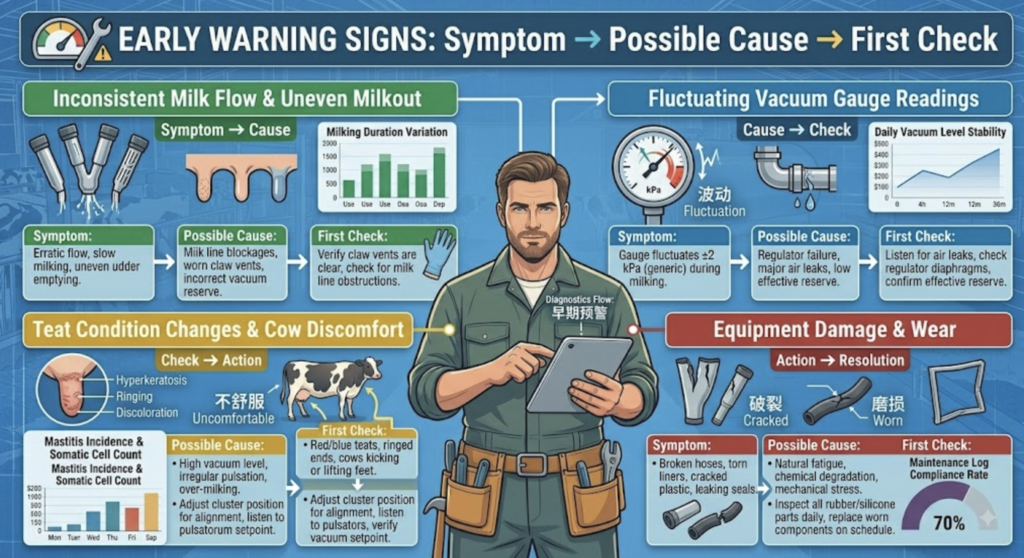
| Warning Sign | Possible Cause | First Check |
|---|---|---|
| Mixer takes longer | Worn knives/scrapers | Inspect wear |
| Mixer vibration | Bearing, auger or driveline issue | Stop and inspect |
| Hydraulic movement slows | Fluid, filter or pump problem | Check fluid/filter |
| Milking vacuum fluctuates | Leak, regulator or pump issue | Inspect vacuum system |
| Fan airflow feels weak | Dirty shutter or worn belt | Clean and inspect |
| Motor runs hot | Load, bearing or electrical issue | Stop and investigate |
| Scraper moves unevenly | Cable/chain wear | Inspect tension |
A symptom is a warning, not a diagnosis. Shut equipment down when required and follow manufacturer troubleshooting and safe energy-isolation procedures before inspection.
4. How Do You Measure Maintenance Cost and Equipment Reliability?
A good Preventive Maintenance for Dairy Equipment program should be measurable.
Without numbers, it is difficult to know whether maintenance is actually improving reliability.
Maintenance Compliance
Use:
Maintenance compliance (%) = Completed scheduled tasks ÷ Scheduled tasks × 100
Example:
46 completed ÷ 50 scheduled × 100 = 92% compliance
This tells the manager whether scheduled work is actually being completed.
Equipment Availability
Use:
Availability (%) = (Planned operating time − Downtime) ÷ Planned operating time × 100
Example:
(720 hr − 18 hr) ÷ 720 hr × 100 = 97.5% availability
This is an illustrative calculation, not an industry benchmark.
The value comes from tracking the same machine over time.
Mean Time Between Failures
Use:
MTBF = Total operating hours ÷ Number of failures
Example:
2,400 operating hr ÷ 6 failures = 400 hr MTBF
If the next year becomes:
2,500 hr ÷ 4 failures = 625 hr MTBF
the machine is operating longer between failures.
Maintenance Cost per Hour
Use:
Maintenance cost/hour = Annual maintenance cost ÷ Annual operating hours
Example:
$7,500 ÷ 1,500 hr = $5.00/hr
Key Maintenance KPIs
| KPI | Formula | What It Shows |
|---|---|---|
| Maintenance compliance | Completed ÷ scheduled × 100 | Is the plan being followed? |
| Availability | Operating time ÷ planned time × 100 | Is equipment available? |
| MTBF | Operating hours ÷ failures | Is reliability improving? |
| Maintenance cost/hour | Maintenance cost ÷ operating hours | What does maintenance cost? |
| Downtime rate | Downtime ÷ scheduled time × 100 | How much time is lost? |
Calculate Breakdown Cost
Consider a planning example:
| Breakdown Cost | Amount |
|---|---|
| Parts | $1,200 |
| Technician | $600 |
| Emergency rental | $800 |
| Additional labor | $300 |
| Direct cost | $2,900 |
If a planned $250 inspection and repair could have prevented that specific failure:
Illustrative avoided direct cost = $2,900 − $250 = $2,650
This does not mean every $250 maintenance activity creates a $2,650 return.
The useful question is:
What is the cost of prevention compared with the probability and consequence of failure?
5. How to Build a Dairy Preventive Maintenance Program
The best program is not the one with the longest checklist.
It is the one employees actually follow.
30-Day Implementation Plan
| Time | Action |
|---|---|
| Day 1–3 | List all important equipment |
| Day 4–7 | Rank machines by criticality |
| Week 2 | Collect manuals and service intervals |
| Week 2 | Build daily/weekly/monthly checklists |
| Week 3 | Identify critical spare parts |
| Week 3 | Assign maintenance responsibility |
| Week 4 | Start maintenance records |
| Day 30 | Review missed tasks and failures |
Do not try to build the perfect program on Day 1.
Start with the five machines that would create the biggest operational problem if they failed tomorrow.
Stock Critical Spare Parts
Do not try to stock an entire dealership.
Prioritize parts that are:
frequently replaced + inexpensive to store + difficult to obtain quickly + capable of stopping a critical machine
Depending on the equipment, examples may include:
- belts;
- bearings;
- filters;
- mixer knives;
- hoses;
- fuses;
- relays;
- seals;
- sensors;
- switches;
- selected milking-system wear parts.
Your own maintenance history should gradually determine the final spare-parts list.
Use a Simple Condition System
| Status | Meaning | Action |
|---|---|---|
| Green | Normal | Continue operation |
| Yellow | Wear developing | Schedule maintenance |
| Orange | Failure becoming likely | Repair promptly |
| Red | Critical/unsafe | Stop according to safety procedure |
This makes maintenance communication easier for operators and supervisors.
Give Every Critical Machine One Maintenance Sheet
Include:
- equipment ID;
- make/model;
- serial number;
- service intervals;
- lubricant specifications;
- critical spare parts;
- wear-part numbers;
- supplier/service contact;
- maintenance history;
- next scheduled service.
Common Maintenance Mistakes
| Mistake | Better Practice |
|---|---|
| Waiting for breakdowns | Inspect on schedule |
| Same lubricant for everything | Follow manufacturer specification |
| No maintenance history | Record every service |
| Using calendar only | Track operating hours |
| Ignoring unusual noise | Investigate changes |
| Cleaning only visible areas | Inspect internal components |
| Ordering parts after failure | Stock critical spares |
| Copying another machine’s schedule | Use the correct manual |
| No backup plan | Identify alternatives |
| Servicing energized equipment | Follow safe isolation procedures |
Frequently Asked Questions
How often should dairy equipment be serviced?
There is no universal interval. Some components need daily inspection, while oils, filters, bearings, belts, hoses, and other parts have machine-specific service intervals. Follow the manufacturer’s manual and adjust inspection frequency for workload and environment.
Which dairy equipment should receive maintenance first?
Prioritize equipment whose failure immediately affects feeding, milking, water, cooling, or animal care. Common examples include the TMR mixer, milking system, water pumps, critical tractors/loaders, and major ventilation equipment.
How often should a TMR mixer be inspected?
Operators should monitor it during normal use and follow the manufacturer’s service schedule. University of Delaware Extension also recommends inspecting important internal wear components such as knives, scrapers, and shoes approximately every 90 days.
How much airflow can dirty dairy fans lose?
UW–Madison Extension reports that dirty fans, particularly dirty shutters, can reduce airflow and efficiency by approximately 10–40%.
What is the difference between preventive and predictive maintenance?
Preventive maintenance is performed according to planned intervals such as hours, days, weeks, or months. Predictive maintenance uses machine condition—such as temperature, vibration, pressure, electrical current, or sensor data—to estimate when service is needed. Larger or more automated dairies can use both approaches together.
Does a small dairy need maintenance software?
Not necessarily. A spreadsheet, printed checklist, whiteboard, or simple digital system can work well. The important points are clear schedules, assigned responsibility, service records, and accessible machine history.
Evidence Behind This Guide
| Evidence / Recommendation | Source |
|---|---|
| Preventive maintenance includes scheduled inspection, lubrication, adjustment and records | FAO |
| Regular equipment inspections and manufacturer-specific schedules | UMass Extension |
| Mixer internal-component inspection around 90 days | University of Delaware Extension |
| Milking hoses/gaskets: at least 6-month reference | University of New Hampshire Extension |
| Pulsator rebuilding: approximately 1–2 times/year | University of New Hampshire Extension |
| Dirty fans can reduce airflow/efficiency by approximately 10–40% | UW–Madison Dairy Extension |
Maintenance and Safety Note
The schedules and calculations in this guide are planning tools. Instructions from the equipment manufacturer take priority for service intervals, lubricants, replacement parts, calibration, electrical work, lockout/energy isolation, and other safety procedures.
Machine age, operating hours, dust, moisture, temperature, manure exposure, loading conditions, and service history can all change how frequently inspections are needed.
Conclusion
Preventive Maintenance for Dairy Equipment works best when maintenance becomes part of normal farm management rather than an emergency response to broken machinery.
Start with critical machines. Give each one an ID, follow manufacturer service intervals, perform short daily inspections, keep selected spare parts, and record completed work.
Pay particular attention to TMR mixer maintenance, milking equipment, the barn ventilation system, water systems, pumps, loaders, and other machines that directly affect everyday production.
The practical workflow is:
Identify → Prioritize → Inspect → Maintain → Record → Measure → Improve
A small farm does not need expensive software to begin. A clear spreadsheet and disciplined daily inspection can already create useful equipment history.
As the records grow, maintenance becomes less about asking:
“Why did this machine break again?”
and more about asking:
“What changed before it failed?”
That shift—from reacting to breakdowns to recognizing warning signs early—is the real value of Preventive Maintenance for Dairy Equipment.
Recommended Resources
- Dairy Farm Machine – Dairy Farm Equipment
- FAO – Preventive Maintenance
- UMass Extension – Equipment Maintenance
- University of Delaware – TMR Mixer Maintenance
- UW–Madison Dairy Extension
- University of New Hampshire Extension
- International Dairy Federation
- FAO – Dairy Production and Products
- National Dairy FARM Program
- Journal of Dairy Science
- Progressive Dairy
- Dairy Herd Management