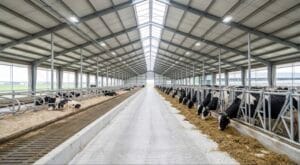
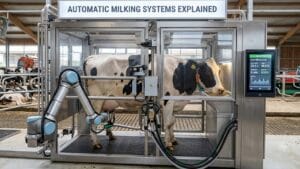
Modern dairy farming has transformed from labor-intensive operations into highly efficient, technology-driven production systems. Advances in genetics, nutrition, machinery, automation, and digital technology have significantly improved milk production, animal welfare, and farm sustainability.
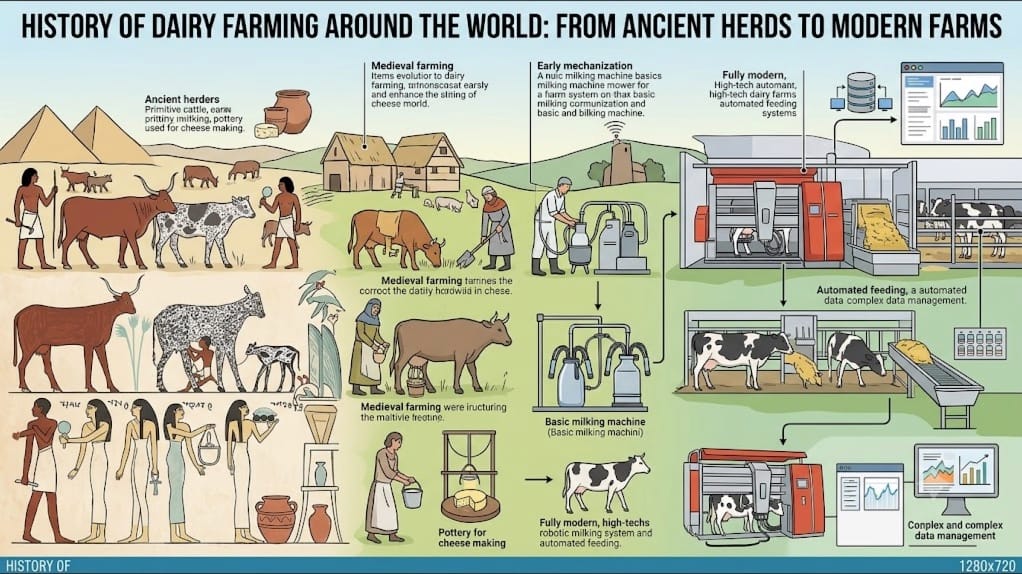
| Period | Major Development | Impact on Modern Dairy Farming |
|---|---|---|
| 1900s–1930s | Mechanical milking machines and milk cooling systems introduced | Reduced manual labor, improved milk hygiene, and increased production efficiency. |
| 1940s–1960s | Artificial insemination and improved dairy genetics | Increased milk yield and improved herd quality through selective breeding. |
| 1960s–1980s | Tractors, bulk milk tanks, and modern barns became common | Improved feeding, transportation, storage, and large-scale farm operations. |
| 1980s–1990s | Total Mixed Ration (TMR) feeding systems developed | Improved feed consistency, nutrition management, and milk production. |
| 1990s–2000s | Computerized herd management systems introduced | Enabled digital recording of milk yield, breeding, and animal health data. |
| 2000s–2010s | Robotic milking and automatic feeding technologies expanded | Reduced labor requirements and allowed more flexible farm management. |
| 2010s–2020s | Precision dairy farming and IoT technology developed | Smart collars, sensors, and cameras enabled real-time monitoring of cow health and behavior. |
| 2020s–Future | AI-powered smart dairy farms and autonomous systems | Combines artificial intelligence, robotics, big data, and sustainability technologies for next-generation farming. |
Understanding the History of Dairy Farming Around the World in Ancient Times
| Period | Region | Dairy Farming Development | Importance |
|---|---|---|---|
| Over 8,000 years ago | Middle East | Early farmers domesticated cattle, sheep, and goats for milk production. | Provided an important source of nutrition, including energy, protein, and minerals. |
| Ancient Agricultural Period | Early farming communities | People developed basic methods to collect and store milk. | Improved food availability and supported human survival. |
| Ancient Times | Middle East, Europe, and Asia | Milk processing methods such as cheese, yogurt, and butter production were developed. | Extended milk storage life and reduced spoilage problems. |
| Early Dairy Culture Development | Various civilizations worldwide | Dairy products became part of traditional diets and farming systems. | Created the foundation for future dairy production and animal management. |
The earliest dairy farming activities began thousands of years ago when humans started domesticating animals. Archaeological evidence suggests that early farmers in the Middle East used cattle, sheep, and goats for milk production more than 8,000 years ago.
At that time, milk was not only a source of nutrition but also a way to improve survival. Fresh milk could provide energy, protein, and important minerals. However, because milk spoiled quickly, ancient people developed methods to process it into longer-lasting products such as cheese, yogurt, and butter.
How Early Civilizations and Regions Developed Dairy Production
| Civilizations / Regions | Dairy Farming Development | Contribution to Dairy Production |
|---|---|---|
| Mesopotamia & Egypt | Raised livestock including cattle, sheep, and goats as part of agricultural systems. | Developed early animal management and breeding practices to improve milk production. |
| Central Asia | Nomadic groups relied on dairy animals and produced fermented milk products. | Created long-lasting dairy foods suitable for storage and travel. |
| India | Integrated cattle into farming systems and developed traditional dairy practices. | Built a strong dairy culture that continues to influence modern production. |
| Europe | Farmers selected cattle breeds with higher milk production and better environmental adaptation. | Improved dairy breeds and established advanced dairy farming traditions. |
| Switzerland, Netherlands & Denmark | Dairy farming became an important part of rural economies. | Contributed to modern dairy breed development and commercial dairy production. |
Different ancient civilizations made important contributions to dairy farming. In Mesopotamia, Egypt, and parts of Europe, livestock played a major role in agriculture. Farmers learned that keeping healthy animals and managing breeding could improve milk production.
In Central Asia, nomadic groups depended heavily on dairy animals. They produced fermented milk products that could be stored and consumed during long journeys. In India, cattle became an important part of farming systems, and traditional dairy practices continued to influence modern production.
Europe also played a major role in dairy development. Farmers selected cattle breeds that produced more milk and adapted better to local environments. Over time, dairy farming became an important part of rural communities, especially in countries such as Switzerland, the Netherlands, and Denmark.
How the History of Dairy Farming Around the World Changed During Industrial Development
The history of dairy farming around the world in the modern era is closely connected with technological progress. From traditional hand milking to today’s intelligent production systems, the dairy equipment evolution reflects how agriculture has continuously improved through engineering, science, and innovation.
Modern dairy farms are very different from traditional farms because many daily tasks are now supported by machines, automation, and digital systems. Advanced dairy automation technologies help farmers improve efficiency, reduce labor requirements, and maintain consistent milk production.
Evolution of Dairy Technology
| Period | Technology Development | Impact on Dairy Farming |
|---|---|---|
| Early 1900s | Mechanical milking machines and milk cooling systems | Reduced manual labor and improved milk hygiene. |
| 1950s–1970s | Tractors, bulk milk tanks, and improved barns | Increased farm productivity and expanded commercial dairy operations. |
| 1980s–2000s | TMR mixers and computerized farm records | Improved feed management and production tracking. |
| 2000s–2010s | Automated feeding systems and robotic milking | Reduced labor costs and improved operational efficiency. |
| 2010s–2020s | Smart collars, sensors, and precision dairy farming | Enabled real-time monitoring of cow health and behavior. |
| Future Dairy Farming | AI, autonomous robots, and intelligent farm platforms | Creates highly efficient, sustainable, and data-driven dairy systems. |
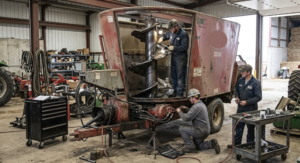
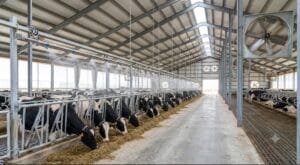
Modern dairy farms use advanced equipment such as milking machines, feed mixers, automatic feeding systems, ventilation systems, and herd monitoring tools. These dairy equipment solutions help farmers save labor, improve animal welfare, and maintain stable production.
One important development is the use of Total Mixed Ration (TMR) feeding systems. A TMR mixer combines different feed ingredients, including forage, grains, minerals, and supplements, into a balanced mixture. According to dairy science, proper nutrition management improves rumen health, milk yield, and feed efficiency.
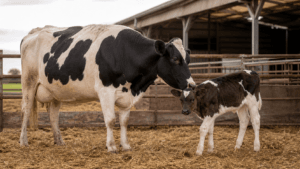
The development of dairy cow genetics has also played an important role in modern production. Through selective breeding and advanced reproductive technologies, farmers have developed cows with higher milk production, better disease resistance, and improved adaptability to different environments.
Data technology has further transformed dairy management. Smart collars, cameras, and monitoring systems can track cow activity, eating behavior, rumination, reproduction, and health conditions. By using global agriculture data and real-time farm information, producers can identify problems earlier and make more accurate management decisions.
What Can We Learn From the History of Dairy Farming Around the World?
The development of dairy farming teaches us that agriculture always changes with human needs and available technology. From small family farms to large automated dairy operations, farmers have continuously improved their methods to produce safer and higher-quality milk.
The future of dairy farming will likely focus on sustainability, animal welfare, and smart farming solutions. Modern farmers are not only trying to produce more milk but also reduce environmental impact and improve the lives of dairy animals.
Understanding this journey helps us appreciate the effort behind every dairy product we consume. Milk production is not simply about raising cows; it is the result of thousands of years of knowledge, innovation, and adaptation.
Conclusion: History of Dairy Farming Around the World
The History of Dairy Farming Around the World reflects the close relationship between humans, animals, and agriculture. From ancient herders using simple methods to modern farms using robotics and digital technology, dairy farming has continuously evolved.
Today, the dairy industry combines traditional knowledge with modern innovation. By learning from the past and adopting new solutions, farmers can continue producing nutritious dairy products while building a more efficient and sustainable future.
Recommend Resources
International Dairy Federation (IDF)
Food and Agriculture Organization (FAO) – Dairy Production