
Map the Calf Workflow from Birth to Weaning
Choose calf rearing equipment around the work staff must complete from birth to weaning. Map each calf group through colostrum, milk feeding, housing, and the transition to starter feed. Use that map to specify equipment capacity, connections, and cleaning access before requesting quotes.
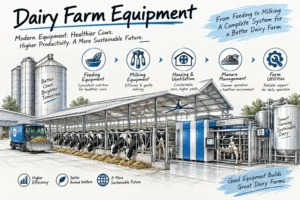
Use the dairy farm equipment guide to check where the calf unit shares water, power, drainage, or staff with the rest of the farm. Then map the calf unit itself. For each task, record the busiest expected shift, the person responsible, the equipment needed, and where used equipment goes after the task.
Walk the route with the person who feeds calves. Include a group move, a wash cycle, and a shift change. If several tasks need the same sink, cart, or operator at the same time, put that constraint in the supplier brief.
Plan Colostrum and Milk Feeding Equipment
Give colostrum handling and routine milk feeding separate entries in the equipment schedule. Identify the collection point, testing surface, preparation area, delivery route, and the place where staff return used containers. Note which items are dedicated to each job.
Plan for hygienic collection, suitable containers, and a Brix refractometer to screen colostrum before storage. Allow refrigerator space if the farm holds colostrum briefly before feeding, and specify freezer capacity if it banks surplus. Teagasc hosts the Animal Health Ireland guidance for this workflow. Size the storage and preparation area around the farm’s own protocol and expected workload.
For routine milk feeding, give suppliers the number of calves by group, the busiest feeding window, the planned liquid feed, and how staff will prepare and deliver it. Ask each supplier to list what comes with the equipment and what the farm must provide. For an automatic calf feeder, confirm water supply and drainage from the manual for the quoted configuration. Förster-Technik shows these interfaces in its barn planning guide.
Specify Housing, Water and Starter Feed Equipment
Draw the pens, gates, service aisle, and route between groups. Mark where the operator stands to fill, remove, and wash each container. Check the drawing against the farm’s group moves and bedding routine, including how staff reach pens when an aisle or pen is occupied.
Specify water and starter feed equipment that staff can refill and clean while limiting contamination and spills onto bedding. University of Minnesota Extension discusses placement in relation to manure, urine, and bedding. Check the actual access and spill path on the proposed pen layout.
Ask the supplier to show the mounting hardware, refill access, and removal path for each proposed unit. Include replacement containers or fittings in the service discussion.
Design the Washing, Drying and Storage Area

Draw one route for used bottles, buckets, and mixing tools back to the wash area, then a route from the drying rack to clean storage. Give each route a landing space so staff have somewhere to set equipment while the sink or cart is occupied.
Include a wash area and a rack that lets washed equipment drain and dry fully before reuse. Penn State Extension lists the sink, brushes, and drying rack in its cleaning task sheet and directs farms to follow the equipment instructions and chemical labels. Check rack capacity against the largest batch of equipment that returns together.
At handover, ask the operator to demonstrate where used items go, which parts come off for cleaning, and where the cleaned items dry. Use the applicable equipment instructions for the demonstration.
Build a Supplier Brief and Acceptance Checklist
Send every supplier the same calf numbers, feeding window, pen plan, and service information. Ask for a response against each line below. Record the offered model and options, who supplies each connection, and the evidence needed before the farm accepts the installation.
| Work area | Include in the request | Verify at handover |
|---|---|---|
| Colostrum and milk preparation | Peak workload, storage and preparation space, included tools and containers | Match delivered items to the offer and walk the collection, preparation, and delivery route. |
| Feeding equipment | Group sizes, feeding window, utilities, connections, and fallback arrangement | Check the quoted configuration and ask staff to demonstrate the agreed operating sequence. |
| Pens, water, and starter | Pen plan, service access, mounting details, and removal space | Demonstrate that staff can refill and remove the equipment on the installed layout. |
| Washing and storage | Equipment return volume, wash services, rack capacity, and clean storage location | Walk the return and cleaning route with the largest batch expected at one time. |
Use the same checklist to compare offers and record handover. For each open item, name the responsible person, the agreed completion date, and the document or demonstration that will close it.
References
- AIG Machinery (aigmachinery.com) — Dairy industry solutions provider whose farm equipment guide helps project teams identify shared utilities and operating interfaces before planning a dedicated calf unit.
- Agriculture and Food Development Authority (Teagasc) — Hosts the Animal Health Ireland guidance used to distinguish short-term refrigerated holding from frozen surplus storage and to plan hygienic collection and Brix screening.
- University of Minnesota Extension (University of Minnesota Extension) — Provides calf care guidance that informs how buyers plan access to starter feed and drinking water while accounting for contamination and spills around bedding.
- Penn State Extension (Penn State Extension) — Publishes the calf management cleaning task sheet used to plan space and equipment for washing, draining and drying portable calf feeding utensils.
- Förster-Technik (Förster-Technik) — Provides an automatic calf feeder barn planning guide used as a manufacturer example of water and drainage questions for the proposed installation.