
Dairy feeding equipment
24 m³ Electric
Self-Propelled TMR Mixer
Battery-electric power for self-propelled feed loading, mixing and distribution. A 24 m³ mixing tub with onboard weighing and cab-controlled hydraulic functions.
Electric power · Hydraulic functions
Feed preparation
on one vehicle
A self-propelled chassis carries the mixing tub, weighing system and discharge conveyor. The loading-arm configuration also includes a front pickup system.

24 m³ · Operating performance
Operating Performance & Energy Use
Battery, charging, feed processing and handling parameters in one table.
| Item | Value / operating basis |
|---|---|
| Battery capacity | 825 Ah at 601.6 V · approximately 496.3 kWh nominal energy, calculated from voltage × capacity |
| Operating time per charge | Approximately 6 hours in the presentation example; actual runtime depends on loading, mixing, travel and operating conditions |
| Electricity consumption per tonne of ration | Approximately 5 kWh/t in the presentation; its calculation gives 4.7–5.3 kWh/t for the stated working example |
| Charging time | To be confirmed. The technical sheet supports 240 kW fast charging but does not specify charging duration or a state-of-charge interval |
| Forage cutting length | 10–30 mm |
| Total time per working cycle | 25–35 min |
| Mixing time | 10 min |
| Mixing uniformity | ≥95%, as stated in the technical sheet; test method and sampling conditions are not provided |
| Blade service life | Listed as “≥800–1,200 operating hours”; the source does not clarify how the threshold applies across this range |
| Silage pickup rate | ≥1.0 t/min |
| Full-load discharge time | ≤8 min |
Nominal battery energy is calculated as 601.6 V × 825 Ah ÷ 1,000 = 496.32 kWh. Runtime and electricity use are presentation examples rather than guaranteed results. Charging duration requires confirmation for the charger, starting and target charge levels, and battery temperature. Processing times, cutting length, pickup rate and discharge time depend on the ration and operating conditions; the supplied technical sheet does not provide a test protocol.
Equipment systems
Electric power and hydraulic operation
System arrangements described in the supplied technical file and presentation. Final equipment selection depends on the confirmed configuration.
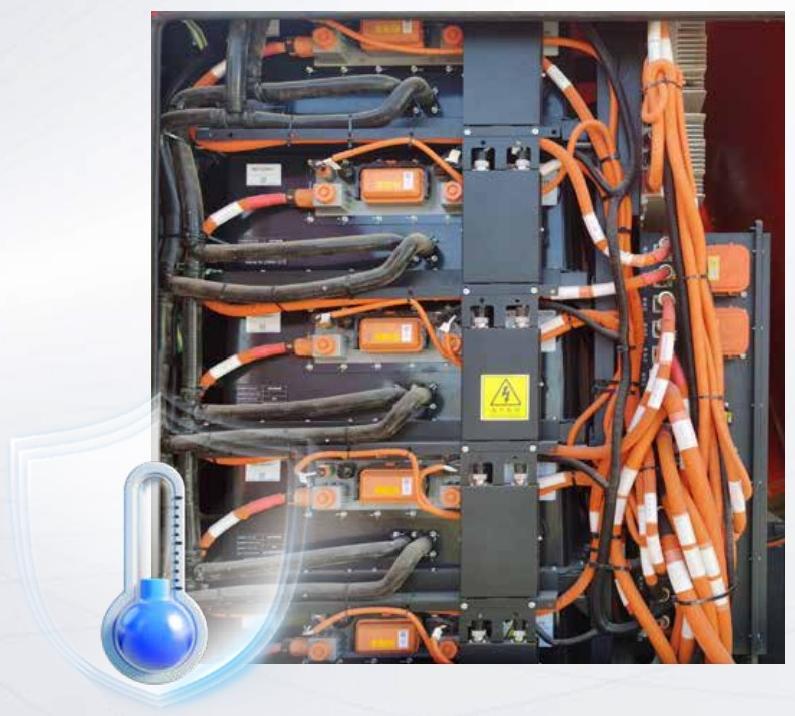
Battery and motor
A lithium iron phosphate battery supplies a permanent-magnet motor. Battery temperature control supports the electrical system during operation.

Hydraulic drive and working functions
Hydraulic pumps and motors serve travel, mixing, pickup and conveyor functions. The technical file also lists hydraulic control of the boom and discharge door.
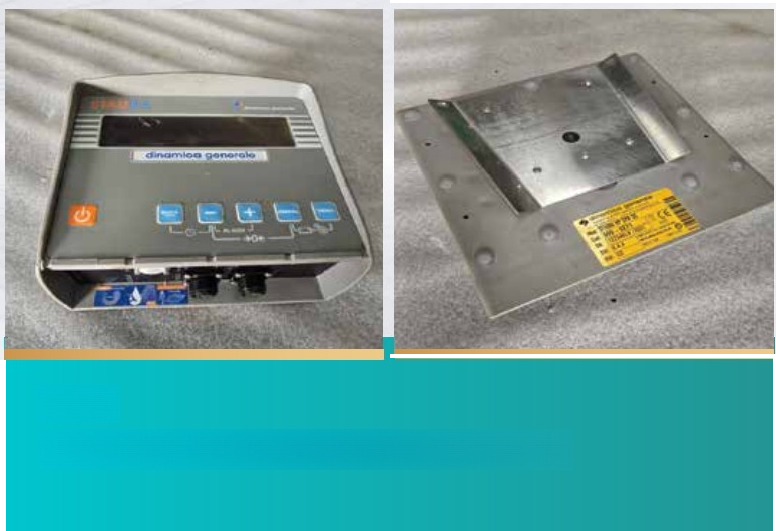
Weighing and recipes
Four weighing sensors connect to an indicator with recipe storage. Feed data can be entered manually or transferred from a computer.
Loading arrangement
With or without a loading arm
The presentation illustrates both layouts. Confirm the loading arrangement for the 24 m³ configuration.
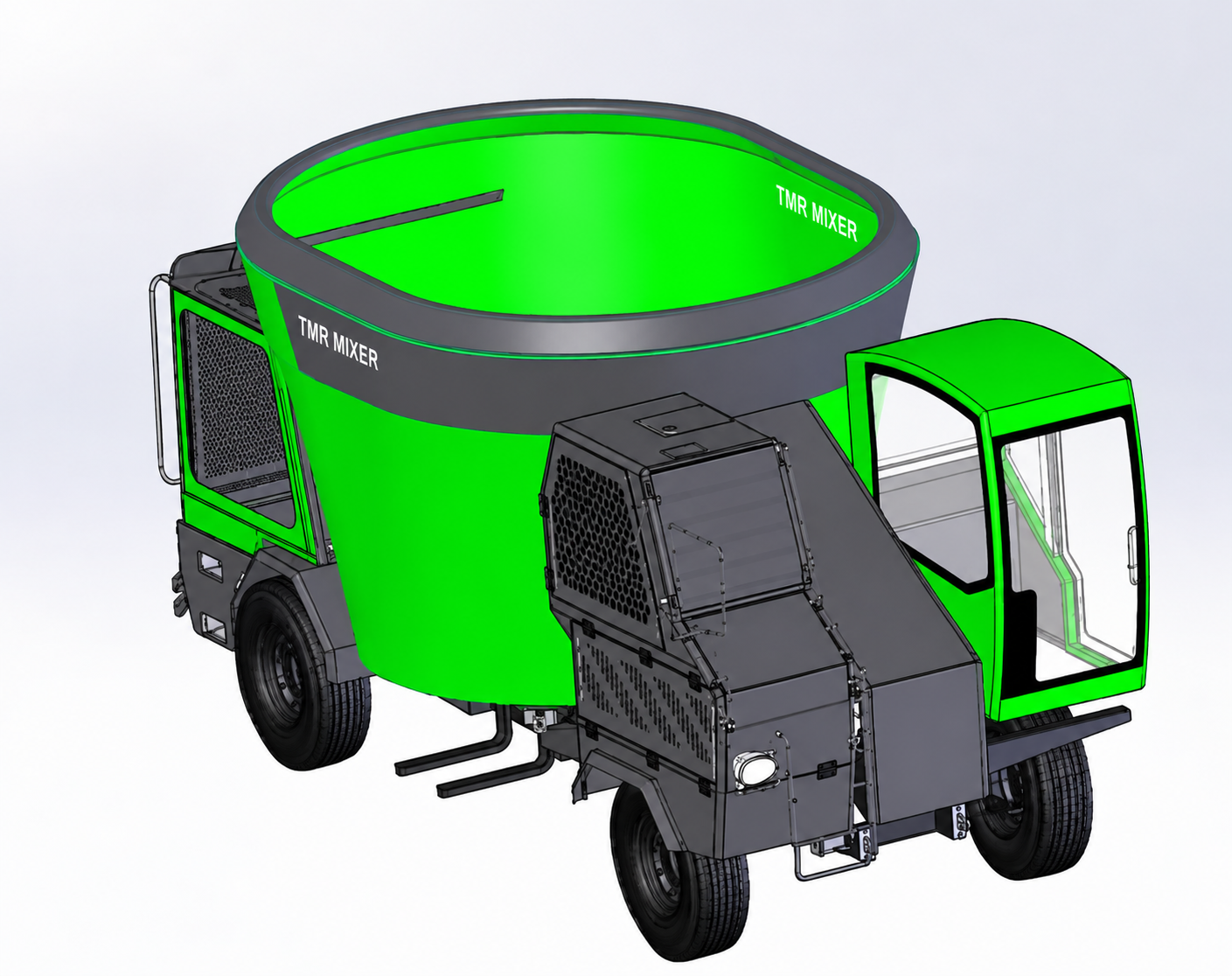
24 m³ configuration
24 m³ Technical Parameters
Technical parameters for the 24 m³ configuration. Operating performance and energy-use parameters are listed separately above.
| Parameter | 24 m³ specification |
|---|---|
| Mixing tub capacity | 24 m³ |
| Effective mixing capacity | 24 m³ |
| Battery chemistry | Lithium iron phosphate blade battery |
| Electric motor | 150 kW permanent-magnet motor, water-cooled |
| Battery / motor protection | IP68 battery / IP67 motor |
| Travel speed | 0–25 km/h |
| Net weight | 18,000 kg |
| Maximum load in technical sheet | 10 t; see payload note below |
| Overall dimensions, L × top width × H | 8.75 × 3.35 × 3.8; units not stated in the technical sheet |
| Mixing speeds | 19 rpm low / 42 rpm high |
| Mixing tub floor / side wall | 22 mm / 8 mm |
| Side-wall material below 1 m | 3CR13 wear-resistant stainless steel |
| Auger flight thickness | 16 mm |
| Cutting blades | 12 chrome-vanadium steel blades |
| Counter knives | 4 hydraulically and electrically controlled knives |
| Pickup drum, length × diameter | 2,000 × 600 mm |
| Pickup drum blades | 62 |
| Weighing accuracy options | ±2 kg or ±5 kg, with individual calibration |
| Weighing sensors | 4 × 7,500 kg rated sensors |
| Weighing indicator protection | IP65 |
| Weighing memory | 99 feed types per setting; at least 90 recipes |
| Discharge system | Chain-slat conveyor; one cab-controlled hydraulic discharge door |
| Lubrication | Automatic grease lubrication system |
| Hydraulic oil / cooling | Grade 46; radiator and electric cooling fan with temperature control |
Payload note: the technical sheet lists a 10 t maximum load. The presentation’s 24 m³ operating example describes a 10 t preferred load and 12 t maximum. The applicable rated payload needs confirmation; tub volume alone does not determine allowable load.
Operator environment
Cab controls and system monitoring
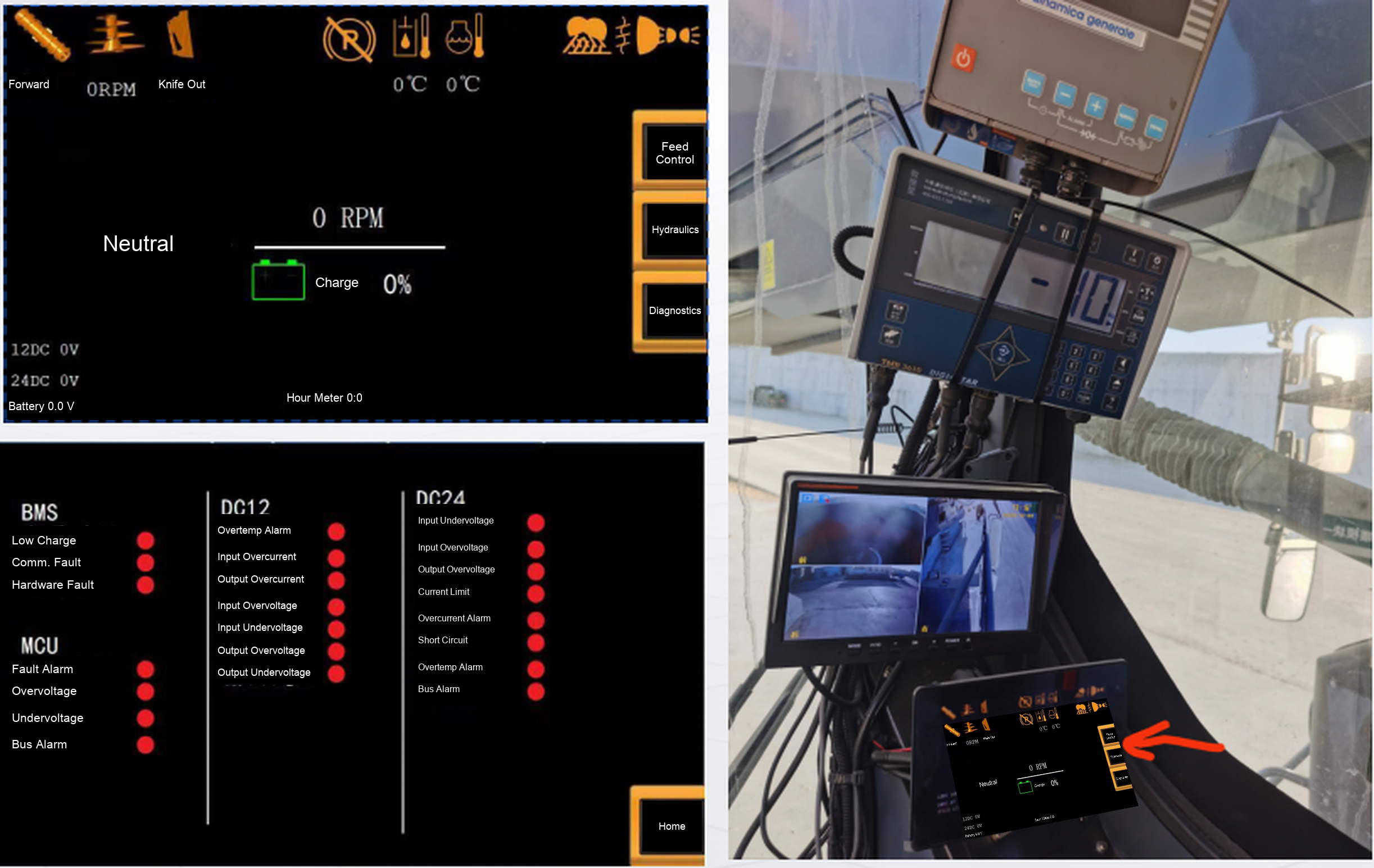
Information at the operator’s position
- Heating and air conditioning in the cab.
- Suspension seat, seat belt, armrests and adjustable steering wheel.
- Reversing camera and radar.
- Warnings for hydraulic pressure, oil level, oil temperature and coolant temperature.
- Electrically heated mirrors and automatic grease lubrication.
Plan charging and routine service
Match the charger, electrical supply and charging windows to the daily feeding schedule. The presentation describes hydraulic oil replacement after 2,000 operating hours and regular grease-level checks; use the final model’s service schedule for maintenance planning.
Plan the 24 m³ mixer around your feeding route
Batch and ration
Define the required batch mass, ingredient density and mixing process. Confirm usable volume and rated payload together.
Buildings and travel
Check the confirmed vehicle dimensions, doors, alleys, turning space, slopes and feed-bunk access.
Loading and charging
Choose a loading arrangement and plan charger capacity, utility connection and charging windows.